In computer science, in the field of databases, read–write conflict, also known as unrepeatable reads, is a computational anomaly associated with interleaved execution of transactions. Specifically, a read–write conflict occurs when a "transaction requests to read an entity for which an unclosed transaction has already made a write request." Given a schedule S S = [ T 1 T 2 R ( A ) R ( A ) W ( A ) C o m . R ( A ) W ( A ) C o m . ] {\displaystyle S={\begin{bmatrix}T1&T2\\R(A)&\\&R(A)\\&W(A)\\&Com.\\R(A)&\\W(A)&\\Com.&\end{bmatrix}}} In this example, T1 has read the original value of A, and is waiting for T2 to finish. T2 also reads the original value of A, overwrites A, and commits. However, when T1 reads from A, it discovers two different versions of A, and T1 would be forced to abort, because T1 would not know what to do. This is an unrepeatable read. This could never occur in a serial schedule, in which each transaction executes in its entirety before another begins. Strict two-phase locking (Strict 2PL) or Serializable Snapshot Isolation (SSI) prevent this conflict. == Real-world example == Alice and Bob are using a website to book tickets for a specific show. Only one ticket is left for the specific show. Alice signs on first to see that only one ticket is left, and finds it expensive. Alice takes time to decide. Bob signs on and also finds one ticket left, and orders it instantly. Bob purchases and logs off. Alice decides to buy a ticket, to find there are no tickets. This is a typical read–write conflict situation.
Hierarchical control system
A hierarchical control system (HCS) is a form of control system in which a set of devices and governing software is arranged in a hierarchical tree. When the links in the tree are implemented by a computer network, then that hierarchical control system is also a form of networked control system. == Overview == A human-built system with complex behavior is often organized as a hierarchy. For example, a command hierarchy has among its notable features the organizational chart of superiors, subordinates, and lines of organizational communication. Hierarchical control systems are organized similarly to divide the decision making responsibility. Each element of the hierarchy is a linked node in the tree. Commands, tasks and goals to be achieved flow down the tree from superior nodes to subordinate nodes, whereas sensations and command results flow up the tree from subordinate to superior nodes. Nodes may also exchange messages with their siblings. The two distinguishing features of a hierarchical control system are related to its layers. Each higher layer of the tree operates with a longer interval of planning and execution time than its immediately lower layer. The lower layers have local tasks, goals, and sensations, and their activities are planned and coordinated by higher layers which do not generally override their decisions. The layers form a hybrid intelligent system in which the lowest, reactive layers are sub-symbolic. The higher layers, having relaxed time constraints, are capable of reasoning from an abstract world model and performing planning. A hierarchical task network is a good fit for planning in a hierarchical control system. Besides artificial systems, an animal's control systems are proposed to be organized as a hierarchy. In perceptual control theory, which postulates that an organism's behavior is a means of controlling its perceptions, the organism's control systems are suggested to be organized in a hierarchical pattern as their perceptions are constructed so. == Control system structure == The accompanying diagram is a general hierarchical model which shows functional manufacturing levels using computerised control of an industrial control system. Referring to the diagram; Level 0 contains the field devices such as flow and temperature sensors, and final control elements, such as control valves Level 1 contains the industrialised Input/Output (I/O) modules, and their associated distributed electronic processors. Level 2 contains the supervisory computers, which collate information from processor nodes on the system, and provide the operator control screens. Level 3 is the production control level, which does not directly control the process, but is concerned with monitoring production and monitoring targets Level 4 is the production scheduling level. == Applications == === Manufacturing, robotics and vehicles === Among the robotic paradigms is the hierarchical paradigm in which a robot operates in a top-down fashion, heavy on planning, especially motion planning. Computer-aided production engineering has been a research focus at NIST since the 1980s. Its Automated Manufacturing Research Facility was used to develop a five layer production control model. In the early 1990s DARPA sponsored research to develop distributed (i.e. networked) intelligent control systems for applications such as military command and control systems. NIST built on earlier research to develop its Real-Time Control System (RCS) and Real-time Control System Software which is a generic hierarchical control system that has been used to operate a manufacturing cell, a robot crane, and an automated vehicle. In November 2007, DARPA held the Urban Challenge. The winning entry, Tartan Racing employed a hierarchical control system, with layered mission planning, motion planning, behavior generation, perception, world modelling, and mechatronics. === Artificial intelligence === Subsumption architecture is a methodology for developing artificial intelligence that is heavily associated with behavior based robotics. This architecture is a way of decomposing complicated intelligent behavior into many "simple" behavior modules, which are in turn organized into layers. Each layer implements a particular goal of the software agent (i.e. system as a whole), and higher layers are increasingly more abstract. Each layer's goal subsumes that of the underlying layers, e.g. the decision to move forward by the eat-food layer takes into account the decision of the lowest obstacle-avoidance layer. Behavior need not be planned by a superior layer, rather behaviors may be triggered by sensory inputs and so are only active under circumstances where they might be appropriate. Reinforcement learning has been used to acquire behavior in a hierarchical control system in which each node can learn to improve its behavior with experience. James Albus, while at NIST, developed a theory for intelligent system design named the Reference Model Architecture (RMA), which is a hierarchical control system inspired by RCS. Albus defines each node to contain these components. Behavior generation is responsible for executing tasks received from the superior, parent node. It also plans for, and issues tasks to, the subordinate nodes. Sensory perception is responsible for receiving sensations from the subordinate nodes, then grouping, filtering, and otherwise processing them into higher level abstractions that update the local state and which form sensations that are sent to the superior node. Value judgment is responsible for evaluating the updated situation and evaluating alternative plans. World Model is the local state that provides a model for the controlled system, controlled process, or environment at the abstraction level of the subordinate nodes. At its lowest levels, the RMA can be implemented as a subsumption architecture, in which the world model is mapped directly to the controlled process or real world, avoiding the need for a mathematical abstraction, and in which time-constrained reactive planning can be implemented as a finite-state machine. Higher levels of the RMA however, may have sophisticated mathematical world models and behavior implemented by automated planning and scheduling. Planning is required when certain behaviors cannot be triggered by current sensations, but rather by predicted or anticipated sensations, especially those that come about as result of the node's actions.
Quickprop
Quickprop is an iterative method for determining the minimum of the loss function of an artificial neural network, following an algorithm inspired by the Newton's method. Sometimes, the algorithm is classified to the group of the second order learning methods. It follows a quadratic approximation of the previous gradient step and the current gradient, which is expected to be close to the minimum of the loss function, under the assumption that the loss function is locally approximately square, trying to describe it by means of an upwardly open parabola. The minimum is sought in the vertex of the parabola. The procedure requires only local information of the artificial neuron to which it is applied. The k {\displaystyle k} -th approximation step is given by: Δ ( k ) w i j = Δ ( k − 1 ) w i j ( ∇ i j E ( k ) ∇ i j E ( k − 1 ) − ∇ i j E ( k ) ) {\displaystyle \Delta ^{(k)}\,w_{ij}=\Delta ^{(k-1)}\,w_{ij}\left({\frac {\nabla _{ij}\,E^{(k)}}{\nabla _{ij}\,E^{(k-1)}-\nabla _{ij}\,E^{(k)}}}\right)} Where w i j {\displaystyle w_{ij}} is the weight of input i {\displaystyle i} of neuron j {\displaystyle j} , and E {\displaystyle E} is the loss function. The Quickprop algorithm is an implementation of the error backpropagation algorithm, but the network can behave chaotically during the learning phase due to large step sizes.
Linear classifier
In machine learning, a linear classifier makes a classification decision for each object based on a linear combination of its features. A simpler definition is to say that a linear classifier is one whose decision boundaries are linear. Such classifiers work well for practical problems such as document classification, and more generally for problems with many variables (features), reaching accuracy levels comparable to non-linear classifiers while taking less time to train and use. == Definition == If the input feature vector to the classifier is a real vector x → {\displaystyle {\vec {x}}} , then the output score is y = f ( w → ⋅ x → ) = f ( ∑ j w j x j ) , {\displaystyle y=f({\vec {w}}\cdot {\vec {x}})=f\left(\sum _{j}w_{j}x_{j}\right),} where w → {\displaystyle {\vec {w}}} is a real vector of weights and f is a function that converts the dot product of the two vectors into the desired output. (In other words, w → {\displaystyle {\vec {w}}} is a one-form or linear functional mapping x → {\displaystyle {\vec {x}}} onto R.) The weight vector w → {\displaystyle {\vec {w}}} is learned from a set of labeled training samples. Often f is a threshold function, which maps all values of w → ⋅ x → {\displaystyle {\vec {w}}\cdot {\vec {x}}} above a certain threshold to the first class and all other values to the second class; e.g., f ( x ) = { 1 if w T ⋅ x > θ , 0 otherwise {\displaystyle f(\mathbf {x} )={\begin{cases}1&{\text{if }}\ \mathbf {w} ^{T}\cdot \mathbf {x} >\theta ,\\0&{\text{otherwise}}\end{cases}}} The superscript T indicates the transpose and θ {\displaystyle \theta } is a scalar threshold. A more complex f might give the probability that an item belongs to a certain class. For a two-class classification problem, one can visualize the operation of a linear classifier as splitting a high-dimensional input space with a hyperplane: all points on one side of the hyperplane are classified as "yes", while the others are classified as "no". A linear classifier is often used in situations where the speed of classification is an issue, since it is often the fastest classifier, especially when x → {\displaystyle {\vec {x}}} is sparse. Also, linear classifiers often work very well when the number of dimensions in x → {\displaystyle {\vec {x}}} is large, as in document classification, where each element in x → {\displaystyle {\vec {x}}} is typically the number of occurrences of a word in a document (see document-term matrix). In such cases, the classifier should be well-regularized. == Generative models vs. discriminative models == There are two broad classes of methods for determining the parameters of a linear classifier w → {\displaystyle {\vec {w}}} . They can be generative and discriminative models. Methods of the former model joint probability distribution, whereas methods of the latter model conditional density functions P ( c l a s s | x → ) {\displaystyle P({\rm {class}}|{\vec {x}})} . Examples of such algorithms include: Linear Discriminant Analysis (LDA)—assumes Gaussian conditional density models Naive Bayes classifier with multinomial or multivariate Bernoulli event models. The second set of methods includes discriminative models, which attempt to maximize the quality of the output on a training set. Additional terms in the training cost function can easily perform regularization of the final model. Examples of discriminative training of linear classifiers include: Logistic regression—maximum likelihood estimation of w → {\displaystyle {\vec {w}}} assuming that the observed training set was generated by a binomial model that depends on the output of the classifier. Perceptron—an algorithm that attempts to fix all errors encountered in the training set Fisher's Linear Discriminant Analysis—an algorithm (different than "LDA") that maximizes the ratio of between-class scatter to within-class scatter, without any other assumptions. It is in essence a method of dimensionality reduction for binary classification. Support vector machine—an algorithm that maximizes the margin between the decision hyperplane and the examples in the training set. Note: Despite its name, LDA does not belong to the class of discriminative models in this taxonomy. However, its name makes sense when we compare LDA to the other main linear dimensionality reduction algorithm: principal components analysis (PCA). LDA is a supervised learning algorithm that utilizes the labels of the data, while PCA is an unsupervised learning algorithm that ignores the labels. To summarize, the name is a historical artifact. Discriminative training often yields higher accuracy than modeling the conditional density functions. However, handling missing data is often easier with conditional density models. All of the linear classifier algorithms listed above can be converted into non-linear algorithms operating on a different input space φ ( x → ) {\displaystyle \varphi ({\vec {x}})} , using the kernel trick. === Discriminative training === Discriminative training of linear classifiers usually proceeds in a supervised way, by means of an optimization algorithm that is given a training set with desired outputs and a loss function that measures the discrepancy between the classifier's outputs and the desired outputs. Thus, the learning algorithm solves an optimization problem of the form arg min w R ( w ) + C ∑ i = 1 N L ( y i , w T x i ) {\displaystyle {\underset {\mathbf {w} }{\arg \min }}\;R(\mathbf {w} )+C\sum _{i=1}^{N}L(y_{i},\mathbf {w} ^{\mathsf {T}}\mathbf {x} _{i})} where w is a vector of classifier parameters, L(yi, wTxi) is a loss function that measures the discrepancy between the classifier's prediction and the true output yi for the i'th training example, R(w) is a regularization function that prevents the parameters from getting too large (causing overfitting), and C is a scalar constant (set by the user of the learning algorithm) that controls the balance between the regularization and the loss function. Popular loss functions include the hinge loss (for linear SVMs) and the log loss (for linear logistic regression). If the regularization function R is convex, then the above is a convex problem. Many algorithms exist for solving such problems; popular ones for linear classification include (stochastic) gradient descent, L-BFGS, coordinate descent and Newton methods.
Handwriting recognition
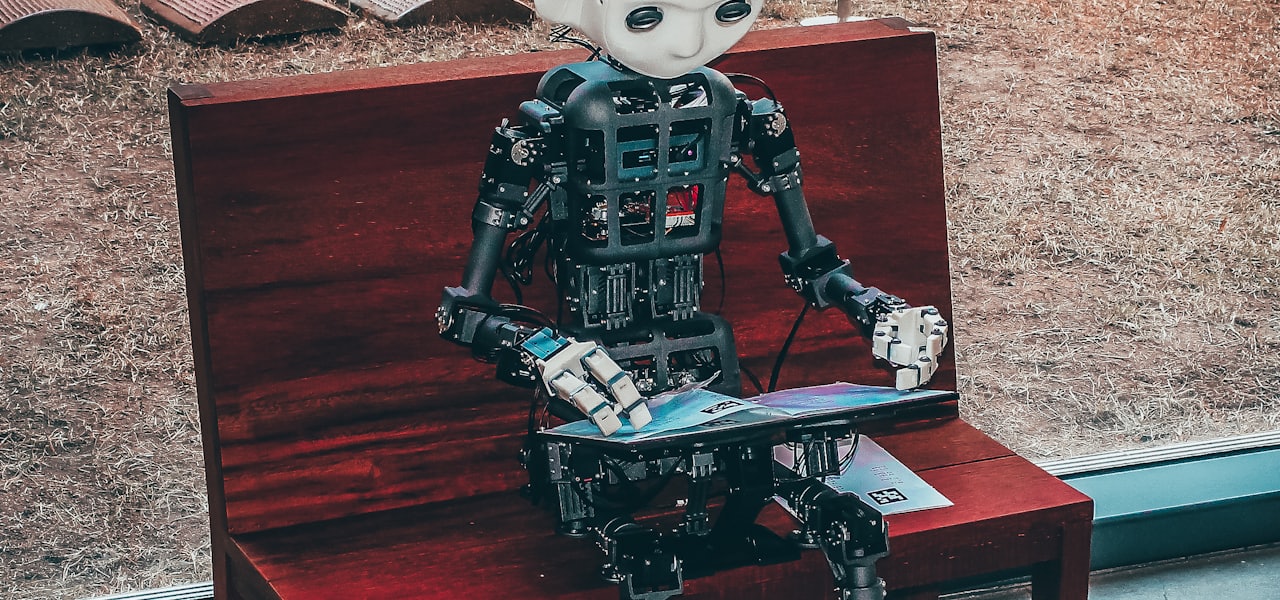
Handwriting recognition (HWR), also known as handwritten text recognition (HTR), is the ability of a computer to receive and interpret intelligible handwritten input from sources such as paper documents, photographs, touch-screens and other devices. The image of the written text may be sensed "off line" from a piece of paper by optical scanning (optical character recognition) or intelligent word recognition. Alternatively, the movements of the pen tip may be sensed "on line", for example by a pen-based computer screen surface, a generally easier task as there are more clues available. A handwriting recognition system handles formatting, performs correct segmentation into characters, and finds the most possible words. == Offline recognition == Offline handwriting recognition involves the automatic conversion of text in an image into letter codes that are usable within computer and text-processing applications. The data obtained by this form is regarded as a static representation of handwriting. Offline handwriting recognition is comparatively difficult, as different people have different handwriting styles. And, as of today, OCR engines are primarily focused on machine printed text and ICR for hand "printed" (written in capital letters) text. === Traditional techniques === ==== Character extraction ==== Offline character recognition often involves scanning a form or document. This means the individual characters contained in the scanned image will need to be extracted. Tools exist that are capable of performing this step. However, there are several common imperfections in this step. The most common is when characters that are connected are returned as a single sub-image containing both characters. This causes a major problem in the recognition stage. Yet many algorithms are available that reduce the risk of connected characters. ==== Character recognition ==== After individual characters have been extracted, a recognition engine is used to identify the corresponding computer character. Several different recognition techniques are currently available. ===== Feature extraction ===== Feature extraction works in a similar fashion to neural network recognizers. However, programmers must manually determine the properties they feel are important. This approach gives the recognizer more control over the properties used in identification. Yet any system using this approach requires substantially more development time than a neural network because the properties are not learned automatically. === Modern techniques === Where traditional techniques focus on segmenting individual characters for recognition, modern techniques focus on recognizing all the characters in a segmented line of text. Particularly they focus on machine learning techniques that are able to learn visual features, avoiding the limiting feature engineering previously used. State-of-the-art methods use convolutional networks to extract visual features over several overlapping windows of a text line image which a recurrent neural network uses to produce character probabilities. == Online recognition == Online handwriting recognition involves the automatic conversion of text as it is written on a special digitizer or PDA, where a sensor picks up the pen-tip movements as well as pen-up/pen-down switching. This kind of data is known as digital ink and can be regarded as a digital representation of handwriting. The obtained signal is converted into letter codes that are usable within computer and text-processing applications. The elements of an online handwriting recognition interface typically include: a pen or stylus for the user to write with a touch sensitive surface, which may be integrated with, or adjacent to, an output display. a software application which interprets the movements of the stylus across the writing surface, translating the resulting strokes into digital text. The process of online handwriting recognition can be broken down into a few general steps: preprocessing, feature extraction and classification The purpose of preprocessing is to discard irrelevant information in the input data, that can negatively affect the recognition. This concerns speed and accuracy. Preprocessing usually consists of binarization, normalization, sampling, smoothing and denoising. The second step is feature extraction. Out of the two- or higher-dimensional vector field received from the preprocessing algorithms, higher-dimensional data is extracted. The purpose of this step is to highlight important information for the recognition model. This data may include information like pen pressure, velocity or the changes of writing direction. The last big step is classification. In this step, various models are used to map the extracted features to different classes and thus identifying the characters or words the features represent. === Hardware === Commercial products incorporating handwriting recognition as a replacement for keyboard input were introduced in the early 1980s. Examples include handwriting terminals such as the Pencept Penpad and the Inforite point-of-sale terminal. With the advent of the large consumer market for personal computers, several commercial products were introduced to replace the keyboard and mouse on a personal computer with a single pointing/handwriting system, such as those from Pencept, CIC and others. The first commercially available tablet-type portable computer was the Write-Top from Linus Technologies, released in July 1988. Its operating system was based on MS-DOS. In the early 1990s, hardware makers including NCR, IBM and EO released tablet computers running the PenPoint operating system developed by GO Corp. PenPoint used handwriting recognition and gestures throughout and provided the facilities to third-party software. IBM's tablet computer was the first to use the ThinkPad name and used IBM's handwriting recognition. This recognition system was later ported to Microsoft Windows for Pen Computing, and IBM's Pen for OS/2. None of these were commercially successful. Advancements in electronics allowed the computing power necessary for handwriting recognition to fit into a smaller form factor than tablet computers, and handwriting recognition is often used as an input method for hand-held PDAs. The first PDA to provide written input was the Apple Newton, which exposed the public to the advantage of a streamlined user interface. However, the device was not a commercial success, owing to the unreliability of the software, which tried to learn a user's writing patterns. By the time of the release of the Newton OS 2.0, wherein the handwriting recognition was greatly improved, including unique features still not found in current recognition systems such as modeless error correction, the largely negative first impression had been made. After discontinuation of Apple Newton, the feature was incorporated in Mac OS X 10.2 and later as Inkwell. Palm later launched a successful series of PDAs based on the Graffiti recognition system. Graffiti improved usability by defining a set of "unistrokes", or one-stroke forms, for each character. This narrowed the possibility for erroneous input, although memorization of the stroke patterns did increase the learning curve for the user. The Graffiti handwriting recognition was found to infringe on a patent held by Xerox, and Palm replaced Graffiti with a licensed version of the CIC handwriting recognition which, while also supporting unistroke forms, pre-dated the Xerox patent. The court finding of infringement was reversed on appeal, and then reversed again on a later appeal. The parties involved subsequently negotiated a settlement concerning this and other patents. A Tablet PC is a notebook computer with a digitizer tablet and a stylus, which allows a user to handwrite text on the unit's screen. The operating system recognizes the handwriting and converts it into text. Windows Vista and Windows 7 include personalization features that learn a user's writing patterns or vocabulary for English, Japanese, Chinese Traditional, Chinese Simplified and Korean. The features include a "personalization wizard" that prompts for samples of a user's handwriting and uses them to retrain the system for higher accuracy recognition. This system is distinct from the less advanced handwriting recognition system employed in its Windows Mobile OS for PDAs. Although handwriting recognition is an input form that the public has become accustomed to, it has not achieved widespread use in either desktop computers or laptops. It is still generally accepted that keyboard input is both faster and more reliable. As of 2006, many PDAs offer handwriting input, sometimes even accepting natural cursive handwriting, but accuracy is still a problem, and some people still find even a simple on-screen keyboard more efficient. === Software === Early software could understand print handwriting where the characters were separated; however, cursive handwriting
Projection-slice theorem
In mathematics, the projection-slice theorem, central slice theorem or Fourier slice theorem in two dimensions states that the results of the following two calculations are equal: Take a two-dimensional function f(r), project (e.g. using the Radon transform) it onto a (one-dimensional) line, and do a Fourier transform of that projection. Take that same function, but do a two-dimensional Fourier transform first, and then slice the function through its origin, parallel to the projection line. In operator terms, if F1 and F2 are the 1- and 2-dimensional Fourier transform operators mentioned above, P1 is the projection operator (which projects a 2-D function onto a 1-D line), S1 is a slice operator (which extracts a 1-D central slice from a function), then F 1 P 1 = S 1 F 2 . {\displaystyle F_{1}P_{1}=S_{1}F_{2}.} This idea can be extended to higher dimensions. This theorem is used, for example, in the analysis of medical CT scans where a "projection" is an x-ray image of an internal organ. The Fourier transforms of these images are seen to be slices through the Fourier transform of the 3-dimensional density of the internal organ, and these slices can be interpolated to build up a complete Fourier transform of that density. The inverse Fourier transform is then used to recover the 3-dimensional density of the object. This technique was first derived by Ronald N. Bracewell in 1956 for a radio-astronomy problem. == The projection-slice theorem in N dimensions == In N dimensions, the projection-slice theorem states that the Fourier transform of the projection of an N-dimensional function f(r) onto an m-dimensional linear submanifold is equal to an m-dimensional slice of the N-dimensional Fourier transform of that function consisting of an m-dimensional linear submanifold through the origin in the Fourier space which is parallel to the projection submanifold. In operator terms: F m P m = S m F N . {\displaystyle F_{m}P_{m}=S_{m}F_{N}.\,} == The generalized Fourier-slice theorem == In addition to generalizing to N dimensions, the projection-slice theorem can be further generalized with an arbitrary change of basis. For convenience of notation, we consider the change of basis to be represented as B, an N-by-N invertible matrix operating on N-dimensional column vectors. Then the generalized Fourier-slice theorem can be stated as F m P m B = S m B − T | B − T | F N {\displaystyle F_{m}P_{m}B=S_{m}{\frac {B^{-T}}{|B^{-T}|}}F_{N}} where B − T = ( B − 1 ) T {\displaystyle B^{-T}=(B^{-1})^{T}} is the transpose of the inverse of the change of basis transform. == Proof in two dimensions == The projection-slice theorem is easily proven for the case of two dimensions. Without loss of generality, we can take the projection line to be the x-axis. There is no loss of generality because if we use a shifted and rotated line, the law still applies. Using a shifted line (in y) gives the same projection and therefore the same 1D Fourier transform results. The rotated function is the Fourier pair of the rotated Fourier transform, for which the theorem again holds. If f(x, y) is a two-dimensional function, then the projection of f(x, y) onto the x axis is p(x) where p ( x ) = ∫ − ∞ ∞ f ( x , y ) d y . {\displaystyle p(x)=\int _{-\infty }^{\infty }f(x,y)\,dy.} The Fourier transform of f ( x , y ) {\displaystyle f(x,y)} is F ( k x , k y ) = ∫ − ∞ ∞ ∫ − ∞ ∞ f ( x , y ) e − 2 π i ( x k x + y k y ) d x d y . {\displaystyle F(k_{x},k_{y})=\int _{-\infty }^{\infty }\int _{-\infty }^{\infty }f(x,y)\,e^{-2\pi i(xk_{x}+yk_{y})}\,dxdy.} The slice is then s ( k x ) {\displaystyle s(k_{x})} s ( k x ) = F ( k x , 0 ) = ∫ − ∞ ∞ ∫ − ∞ ∞ f ( x , y ) e − 2 π i x k x d x d y {\displaystyle s(k_{x})=F(k_{x},0)=\int _{-\infty }^{\infty }\int _{-\infty }^{\infty }f(x,y)\,e^{-2\pi ixk_{x}}\,dxdy} = ∫ − ∞ ∞ [ ∫ − ∞ ∞ f ( x , y ) d y ] e − 2 π i x k x d x {\displaystyle =\int _{-\infty }^{\infty }\left[\int _{-\infty }^{\infty }f(x,y)\,dy\right]\,e^{-2\pi ixk_{x}}dx} = ∫ − ∞ ∞ p ( x ) e − 2 π i x k x d x {\displaystyle =\int _{-\infty }^{\infty }p(x)\,e^{-2\pi ixk_{x}}dx} which is just the Fourier transform of p(x). The proof for higher dimensions is easily generalized from the above example. == The FHA cycle == If the two-dimensional function f(r) is circularly symmetric, it may be represented as f(r), where r = |r|. In this case the projection onto any projection line will be the Abel transform of f(r). The two-dimensional Fourier transform of f(r) will be a circularly symmetric function given by the zeroth-order Hankel transform of f(r), which will therefore also represent any slice through the origin. The projection-slice theorem then states that the Fourier transform of the projection equals the slice or F 1 A 1 = H , {\displaystyle F_{1}A_{1}=H,} where A1 represents the Abel-transform operator, projecting a two-dimensional circularly symmetric function onto a one-dimensional line, F1 represents the 1-D Fourier-transform operator, and H represents the zeroth-order Hankel-transform operator. == Extension to fan beam or cone-beam CT == The projection-slice theorem is suitable for CT image reconstruction with parallel beam projections. It does not directly apply to fanbeam or conebeam CT. The theorem was extended to fan-beam and conebeam CT image reconstruction by Shuang-ren Zhao in 1995.
Low-rank approximation
In mathematics, low-rank approximation refers to the process of approximating a given matrix by a matrix of lower rank. More precisely, it is a minimization problem, in which the cost function measures the fit between a given matrix (the data) and an approximating matrix (the optimization variable), subject to a constraint that the approximating matrix has reduced rank. The problem is used for mathematical modeling and data compression. The rank constraint is related to a constraint on the complexity of a model that fits the data. In applications, often there are other constraints on the approximating matrix apart from the rank constraint, e.g., non-negativity and Hankel structure. Low-rank approximation is closely related to numerous other techniques, including principal component analysis, factor analysis, total least squares, latent semantic analysis, orthogonal regression, and dynamic mode decomposition. == Definition == Given structure specification S : R n p → R m × n {\displaystyle {\mathcal {S}}:\mathbb {R} ^{n_{p}}\to \mathbb {R} ^{m\times n}} , vector of structure parameters p ∈ R n p {\displaystyle p\in \mathbb {R} ^{n_{p}}} , norm ‖ ⋅ ‖ {\displaystyle \|\cdot \|} , and desired rank r {\displaystyle r} , minimize over p ^ ‖ p − p ^ ‖ subject to rank ( S ( p ^ ) ) ≤ r . {\displaystyle {\text{minimize}}\quad {\text{over }}{\widehat {p}}\quad \|p-{\widehat {p}}\|\quad {\text{subject to}}\quad \operatorname {rank} {\big (}{\mathcal {S}}({\widehat {p}}){\big )}\leq r.} == Applications == Linear system identification, in which case the approximating matrix is Hankel structured. Machine learning, in which case the approximating matrix is nonlinearly structured. Recommender systems, in which cases the data matrix has missing values and the approximation is categorical. Distance matrix completion, in which case there is a positive definiteness constraint. Natural language processing, in which case the approximation is nonnegative. Computer algebra, in which case the approximation is Sylvester structured. Matrix product states, in which case the approximation is usually rescaled to have fixed Frobenius norm. == Basic low-rank approximation problem == The unstructured problem with fit measured by the Frobenius norm, i.e., minimize over D ^ ‖ D − D ^ ‖ F subject to rank ( D ^ ) ≤ r {\displaystyle {\text{minimize}}\quad {\text{over }}{\widehat {D}}\quad \|D-{\widehat {D}}\|_{\text{F}}\quad {\text{subject to}}\quad \operatorname {rank} {\big (}{\widehat {D}}{\big )}\leq r} has an analytic solution in terms of the singular value decomposition of the data matrix. The result is referred to as the matrix approximation lemma or Eckart–Young–Mirsky theorem. This problem was originally solved by Erhard Schmidt in the infinite dimensional context of integral operators (although his methods easily generalize to arbitrary compact operators on Hilbert spaces) and later rediscovered by C. Eckart and G. Young. L. Mirsky generalized the result to arbitrary unitarily invariant norms. Let D = U Σ V ⊤ ∈ R m × n , m ≥ n {\displaystyle D=U\Sigma V^{\top }\in \mathbb {R} ^{m\times n},\quad m\geq n} be the singular value decomposition of D {\displaystyle D} , where Σ =: diag ( σ 1 , … , σ r ) {\displaystyle \Sigma =:\operatorname {diag} (\sigma _{1},\ldots ,\sigma _{r})} , where r ≤ min { m , n } = n {\displaystyle r\leq \min\{m,n\}=n} , is the m × n {\displaystyle m\times n} rectangular diagonal matrix with r {\displaystyle r} non-zero singular values σ 1 ≥ … ≥ σ r > σ r + 1 = … = σ n = 0 {\displaystyle \sigma _{1}\geq \ldots \geq \sigma _{r}>\sigma _{r+1}=\ldots =\sigma _{n}=0} . For a given k ∈ { 1 , … , r } {\displaystyle k\in \{1,\dots ,r\}} , partition U {\displaystyle U} , Σ {\displaystyle \Sigma } , and V {\displaystyle V} as follows: U =: [ U 1 U 2 ] , Σ =: [ Σ 1 0 0 Σ 2 ] , and V =: [ V 1 V 2 ] , {\displaystyle U=:{\begin{bmatrix}U_{1}&U_{2}\end{bmatrix}},\quad \Sigma =:{\begin{bmatrix}\Sigma _{1}&0\\0&\Sigma _{2}\end{bmatrix}},\quad {\text{and}}\quad V=:{\begin{bmatrix}V_{1}&V_{2}\end{bmatrix}},} where U 1 {\displaystyle U_{1}} is m × k {\displaystyle m\times k} , Σ 1 {\displaystyle \Sigma _{1}} is k × k {\displaystyle k\times k} , and V 1 {\displaystyle V_{1}} is n × k {\displaystyle n\times k} . Then the rank k {\displaystyle k} matrix D ^ ∗ := U 1 Σ 1 V 1 ⊤ , {\displaystyle {\widehat {D}}^{}:=U_{1}\Sigma _{1}V_{1}^{\top },} obtained from the truncated singular value decomposition is such that ‖ D − D ^ ∗ ‖ F = min rank ( D ^ ) ≤ k ‖ D − D ^ ‖ F = σ k + 1 2 + ⋯ + σ r 2 . {\displaystyle \|D-{\widehat {D}}^{}\|_{\text{F}}=\min _{\operatorname {rank} ({\widehat {D}})\leq k}\|D-{\widehat {D}}\|_{\text{F}}={\sqrt {\sigma _{k+1}^{2}+\cdots +\sigma _{r}^{2}}}.} The minimizer D ^ ∗ {\displaystyle {\widehat {D}}^{}} is unique if and only if σ k > σ k + 1 {\displaystyle \sigma _{k}>\sigma _{k+1}} . == Proof of Eckart–Young–Mirsky theorem (for spectral norm) == Let A ∈ R m × n {\displaystyle A\in \mathbb {R} ^{m\times n}} be a real (possibly rectangular) matrix with m ≤ n {\displaystyle m\leq n} . Suppose that A = U Σ V ⊤ {\displaystyle A=U\Sigma V^{\top }} is the singular value decomposition of A {\displaystyle A} . Recall that U {\displaystyle U} and V {\displaystyle V} are orthogonal matrices, and Σ {\displaystyle \Sigma } is an m × n {\displaystyle m\times n} diagonal matrix with entries ( σ 1 , σ 2 , ⋯ , σ m ) {\displaystyle (\sigma _{1},\sigma _{2},\cdots ,\sigma _{m})} such that σ 1 ≥ σ 2 ≥ ⋯ ≥ σ m ≥ 0 {\displaystyle \sigma _{1}\geq \sigma _{2}\geq \cdots \geq \sigma _{m}\geq 0} . We claim that the best rank- k {\displaystyle k} approximation to A {\displaystyle A} in the spectral norm, denoted by ‖ ⋅ ‖ 2 {\displaystyle \|\cdot \|_{2}} , is given by A k := ∑ i = 1 k σ i u i v i ⊤ {\displaystyle A_{k}:=\sum _{i=1}^{k}\sigma _{i}u_{i}v_{i}^{\top }} where u i {\displaystyle u_{i}} and v i {\displaystyle v_{i}} denote the i {\displaystyle i} th column of U {\displaystyle U} and V {\displaystyle V} , respectively. First, note that we have ‖ A − A k ‖ 2 = ‖ ∑ i = 1 n σ i u i v i ⊤ − ∑ i = 1 k σ i u i v i ⊤ ‖ 2 = ‖ ∑ i = k + 1 n σ i u i v i ⊤ ‖ 2 = σ k + 1 {\displaystyle \|A-A_{k}\|_{2}=\left\|\sum _{i=1}^{\color {red}{n}}\sigma _{i}u_{i}v_{i}^{\top }-\sum _{i=1}^{\color {red}{k}}\sigma _{i}u_{i}v_{i}^{\top }\right\|_{2}=\left\|\sum _{i=\color {red}{k+1}}^{n}\sigma _{i}u_{i}v_{i}^{\top }\right\|_{2}=\sigma _{k+1}} Therefore, we need to show that if B k = X Y ⊤ {\displaystyle B_{k}=XY^{\top }} where X {\displaystyle X} and Y {\displaystyle Y} have k {\displaystyle k} columns then ‖ A − A k ‖ 2 = σ k + 1 ≤ ‖ A − B k ‖ 2 {\displaystyle \|A-A_{k}\|_{2}=\sigma _{k+1}\leq \|A-B_{k}\|_{2}} . Since Y {\displaystyle Y} has k {\displaystyle k} columns, then there must be a nontrivial linear combination of the first k + 1 {\displaystyle k+1} columns of V {\displaystyle V} , i.e., w = γ 1 v 1 + ⋯ + γ k + 1 v k + 1 , {\displaystyle w=\gamma _{1}v_{1}+\cdots +\gamma _{k+1}v_{k+1},} such that Y ⊤ w = 0 {\displaystyle Y^{\top }w=0} . Without loss of generality, we can scale w {\displaystyle w} so that ‖ w ‖ 2 = 1 {\displaystyle \|w\|_{2}=1} or (equivalently) γ 1 2 + ⋯ + γ k + 1 2 = 1 {\displaystyle \gamma _{1}^{2}+\cdots +\gamma _{k+1}^{2}=1} . Therefore, ‖ A − B k ‖ 2 2 ≥ ‖ ( A − B k ) w ‖ 2 2 = ‖ A w ‖ 2 2 = γ 1 2 σ 1 2 + ⋯ + γ k + 1 2 σ k + 1 2 ≥ σ k + 1 2 . {\displaystyle \|A-B_{k}\|_{2}^{2}\geq \|(A-B_{k})w\|_{2}^{2}=\|Aw\|_{2}^{2}=\gamma _{1}^{2}\sigma _{1}^{2}+\cdots +\gamma _{k+1}^{2}\sigma _{k+1}^{2}\geq \sigma _{k+1}^{2}.} The result follows by taking the square root of both sides of the above inequality. == Proof of Eckart–Young–Mirsky theorem (for Frobenius norm) == Let A ∈ R m × n {\displaystyle A\in \mathbb {R} ^{m\times n}} be a real (possibly rectangular) matrix with m ≤ n {\displaystyle m\leq n} . Suppose that A = U Σ V ⊤ {\displaystyle A=U\Sigma V^{\top }} is the singular value decomposition of A {\displaystyle A} . We claim that the best rank k {\displaystyle k} approximation to A {\displaystyle A} in the Frobenius norm, denoted by ‖ ⋅ ‖ F {\displaystyle \|\cdot \|_{F}} , is given by A k = ∑ i = 1 k σ i u i v i ⊤ {\displaystyle A_{k}=\sum _{i=1}^{k}\sigma _{i}u_{i}v_{i}^{\top }} where u i {\displaystyle u_{i}} and v i {\displaystyle v_{i}} denote the i {\displaystyle i} th column of U {\displaystyle U} and V {\displaystyle V} , respectively. First, note that we have ‖ A − A k ‖ F 2 = ‖ ∑ i = k + 1 n σ i u i v i ⊤ ‖ F 2 = ∑ i = k + 1 n σ i 2 {\displaystyle \|A-A_{k}\|_{F}^{2}=\left\|\sum _{i=k+1}^{n}\sigma _{i}u_{i}v_{i}^{\top }\right\|_{F}^{2}=\sum _{i=k+1}^{n}\sigma _{i}^{2}} Therefore, we need to show that if B k = X Y ⊤ {\displaystyle B_{k}=XY^{\top }} where X {\displaystyle X} and Y {\displaystyle Y} have k {\displaystyle k} columns then ‖ A − A k ‖ F 2 = ∑ i = k + 1 n σ i 2 ≤ ‖ A − B k ‖ F 2 . {\displaystyle \|A-A_{k}\|_{F}^{2}=\sum _{i=k+1}^{n}\sigma _{i}^{2}\leq \|A-B_{k}\|_{F}^{2}.} By the triangle inequality with the spectral norm