The Landweber iteration or Landweber algorithm is an algorithm to solve ill-posed linear inverse problems, and it has been extended to solve non-linear problems that involve constraints. The method was first proposed in the 1950s by Louis Landweber, and it can be now viewed as a special case of many other more general methods. == Basic algorithm == The original Landweber algorithm attempts to recover a signal x from (noisy) measurements y. The linear version assumes that y = A x {\displaystyle y=Ax} for a linear operator A. When the problem is in finite dimensions, A is just a matrix. When A is nonsingular, then an explicit solution is x = A − 1 y {\displaystyle x=A^{-1}y} . However, if A is ill-conditioned, the explicit solution is a poor choice since it is sensitive to any noise in the data y. If A is singular, this explicit solution doesn't even exist. The Landweber algorithm is an attempt to regularize the problem, and is one of the alternatives to Tikhonov regularization. We may view the Landweber algorithm as solving: min x ‖ A x − y ‖ 2 2 / 2 {\displaystyle \min _{x}\|Ax-y\|_{2}^{2}/2} using an iterative method. The algorithm is given by the update x k + 1 = x k − ω A ∗ ( A x k − y ) . {\displaystyle x_{k+1}=x_{k}-\omega A^{}(Ax_{k}-y).} where the relaxation factor ω {\displaystyle \omega } satisfies 0 < ω < 2 / σ 1 2 {\displaystyle 0<\omega <2/\sigma _{1}^{2}} . Here σ 1 {\displaystyle \sigma _{1}} is the largest singular value of A {\displaystyle A} . If we write f ( x ) = ‖ A x − y ‖ 2 2 / 2 {\displaystyle f(x)=\|Ax-y\|_{2}^{2}/2} , then the update can be written in terms of the gradient x k + 1 = x k − ω ∇ f ( x k ) {\displaystyle x_{k+1}=x_{k}-\omega \nabla f(x_{k})} and hence the algorithm is a special case of gradient descent. For ill-posed problems, the iterative method needs to be stopped at a suitable iteration index, because it semi-converges. This means that the iterates approach a regularized solution during the first iterations, but become unstable in further iterations. The reciprocal of the iteration index 1 / k {\displaystyle 1/k} acts as a regularization parameter. A suitable parameter is found, when the mismatch ‖ A x k − y ‖ 2 2 {\displaystyle \|Ax_{k}-y\|_{2}^{2}} approaches the noise level. Using the Landweber iteration as a regularization algorithm has been discussed in the literature. == Nonlinear extension == In general, the updates generated by x k + 1 = x k − τ ∇ f ( x k ) {\displaystyle x_{k+1}=x_{k}-\tau \nabla f(x_{k})} will generate a sequence f ( x k ) {\displaystyle f(x_{k})} that converges to a minimizer of f whenever f is convex and the stepsize τ {\displaystyle \tau } is chosen such that 0 < τ < 2 / ( ‖ ∇ f ‖ 2 ) {\displaystyle 0<\tau <2/(\|\nabla f\|^{2})} where ‖ ⋅ ‖ {\displaystyle \|\cdot \|} is the spectral norm. Since this is special type of gradient descent, there currently is not much benefit to analyzing it on its own as the nonlinear Landweber, but such analysis was performed historically by many communities not aware of unifying frameworks. The nonlinear Landweber problem has been studied in many papers in many communities; see, for example. == Extension to constrained problems == If f is a convex function and C is a convex set, then the problem min x ∈ C f ( x ) {\displaystyle \min _{x\in C}f(x)} can be solved by the constrained, nonlinear Landweber iteration, given by: x k + 1 = P C ( x k − τ ∇ f ( x k ) ) {\displaystyle x_{k+1}={\mathcal {P}}_{C}(x_{k}-\tau \nabla f(x_{k}))} where P {\displaystyle {\mathcal {P}}} is the projection onto the set C. Convergence is guaranteed when 0 < τ < 2 / ( ‖ A ‖ 2 ) {\displaystyle 0<\tau <2/(\|A\|^{2})} . This is again a special case of projected gradient descent (which is a special case of the forward–backward algorithm) as discussed in. == Applications == Since the method has been around since the 1950s, it has been adopted and rediscovered by many scientific communities, especially those studying ill-posed problems. In X-ray computed tomography it is called simultaneous iterative reconstruction technique (SIRT). It has also been used in the computer vision community and the signal restoration community. It is also used in image processing, since many image problems, such as deconvolution, are ill-posed. Variants of this method have been used also in sparse approximation problems and compressed sensing settings.
Rake (software)
Rake is a software task management and a build automation tool created by Jim Weirich. It allows the user to specify tasks and to describe dependencies as well as to group tasks into namespaces. It is similar to SCons and Make. Rake was written in Ruby and has been part of the standard library of Ruby since version 1.9. == Examples == The tasks that should be executed need to be defined in a configuration file called Rakefile. A Rakefile has no special syntax and contains executable Ruby code. === Tasks === The basic unit in Rake is the task. A task has a name and an action block, that defines its functionality. The following code defines a task called greet that will output the text "Hello, Rake!" to the console. When defining a task, you can optionally add dependencies, that is one task can depend on the successful completion of another task. Calling the "seed" task from the following example will first execute the "migrate" task and only then proceed with the execution of the "seed" task.Tasks can also be made more versatile by accepting arguments. For example, the "generate_report" task will take a date as argument. If no argument is supplied the current date is used.A special type of task is the file task, which can be used to specify file creation tasks. The following task, for example, is given two object files, i.e. "a.o" and "b.o", to create an executable program.Another useful tool is the directory convenience method, that can be used to create directories upon demand. === Rules === When a file is named as a prerequisite but it does not have a file task defined for it, Rake will attempt to synthesize a task by looking at a list of rules supplied in the Rakefile. For example, suppose we were trying to invoke task "mycode.o" with no tasks defined for it. If the Rakefile has a rule that looks like this: This rule will synthesize any task that ends in ".o". It has as a prerequisite that a source file with an extension of ".c" must exist. If Rake is able to find a file named "mycode.c", it will automatically create a task that builds "mycode.o" from "mycode.c". If the file "mycode.c" does not exist, Rake will attempt to recursively synthesize a rule for it. When a task is synthesized from a rule, the source attribute of the task is set to the matching source file. This allows users to write rules with actions that reference the source file. === Advanced rules === Any regular expression may be used as the rule pattern. Additionally, a proc may be used to calculate the name of the source file. This allows for complex patterns and sources. The following rule is equivalent to the example above: NOTE: Because of a quirk in Ruby syntax, parentheses are required around a rule when the first argument is a regular expression. The following rule might be used for Java files: === Namespaces === To better organize big Rakefiles, tasks can be grouped into namespaces. Below is an example of a simple Rake recipe:
Nanonetwork
A nanonetwork or nanoscale network is a set of interconnected nanomachines (devices a few hundred nanometers or a few micrometers at most in size) which are able to perform only very simple tasks such as computing, data storing, sensing and actuation. Nanonetworks are expected to expand the capabilities of single nanomachines both in terms of complexity and range of operation by allowing them to coordinate, share and fuse information. Nanonetworks enable new applications of nanotechnology in the biomedical field, environmental research, military technology and industrial and consumer goods applications. Nanoscale communication is defined in IEEE P1906.1. == Communication approaches == Classical communication paradigms need to be revised for the nanoscale. The two main alternatives for communication in the nanoscale are based either on electromagnetic communication or on molecular communication. === Electromagnetic === This is defined as the transmission and reception of electromagnetic radiation from components based on novel nanomaterials. Recent advancements in carbon and molecular electronics have opened the door to a new generation of electronic nanoscale components such as nanobatteries, nanoscale energy harvesting systems, nano-memories, logical circuitry in the nanoscale and even nano-antennas. From a communication perspective, the unique properties observed in nanomaterials will decide on the specific bandwidths for emission of electromagnetic radiation, the time lag of the emission, or the magnitude of the emitted power for a given input energy, amongst others. For the time being, two main alternatives for electromagnetic communication in the nanoscale have been envisioned. First, it has been experimentally demonstrated that is possible to receive and demodulate an electromagnetic wave by means of a nanoradio, i.e., an electromechanically resonating carbon nanotube which is able to decode an amplitude or frequency modulated wave. Second, graphene-based nano-antennas have been analyzed as potential electromagnetic radiators in the terahertz band. === Molecular === Molecular communication is defined as the transmission and reception of information by means of molecules. The different molecular communication techniques can be classified according to the type of molecule propagation in walkaway-based, flow-based or diffusion-based communication. In walkway-based molecular communication, the molecules propagate through pre-defined pathways by using carrier substances, such as molecular motors. This type of molecular communication can also be achieved by using E. coli bacteria as chemotaxis. In flow-based molecular communication, the molecules propagate through diffusion in a fluidic medium whose flow and turbulence are guided and predictable. The hormonal communication through blood streams inside the human body is an example of this type of propagation. The flow-based propagation can also be realized by using carrier entities whose motion can be constrained on the average along specific paths, despite showing a random component. A good example of this case is given by pheromonal long range molecular communications. In diffusion-based molecular communication, the molecules propagate through spontaneous diffusion in a fluidic medium. In this case, the molecules can be subject solely to the laws of diffusion or can also be affected by non-predictable turbulence present in the fluidic medium. Pheromonal communication, when pheromones are released into a fluidic medium, such as air or water, is an example of diffusion-based architecture. Other examples of this kind of transport include calcium signaling among cells, as well as quorum sensing among bacteria. Based on the macroscopic theory of ideal (free) diffusion the impulse response of a unicast molecular communication channel was reported in a paper that identified that the impulse response of the ideal diffusion based molecular communication channel experiences temporal spreading. Such temporal spreading has a deep impact in the performance of the system, for example in creating the intersymbol interference (ISI) at the receiving nanomachine. In order to detect the concentration-encoded molecular signal two detection methods named sampling-based detection (SD) and energy-based detection (ED) have been proposed. While the SD approach is based on the concentration amplitude of only one sample taken at a suitable time instant during the symbol duration, the ED approach is based on the total accumulated number of molecules received during the entire symbol duration. In order to reduce the impact of ISI a controlled pulse-width based molecular communication scheme has been analysed. The work presented in showed that it is possible to realize multilevel amplitude modulation based on ideal diffusion. A comprehensive study of pulse-based binary and sinus-based, concentration-encoded molecular communication system have also been investigated.
Web worker
A web worker, as defined by the World Wide Web Consortium (W3C) and the Web Hypertext Application Technology Working Group (WHATWG), is a JavaScript script executed from an HTML page that runs in the background, independently of scripts that may also have been executed from the same HTML page. Web workers are often able to utilize multi-core CPUs more effectively. The W3C and WHATWG envision web workers as long-running scripts that are not interrupted by scripts that respond to clicks or other user interactions. Keeping such workers from being interrupted by user activities should allow Web pages to remain responsive at the same time as they are running long tasks in the background. The web worker specification is part of the HTML Living Standard. == Overview == As envisioned by WHATWG, web workers are relatively heavy-weight and are not intended to be used in large numbers. They are expected to be long-lived, with a high start-up performance cost, and a high per-instance memory cost. Web workers run outside the context of an HTML document's scripts. Consequently, while they do not have access to the DOM, they can facilitate concurrent execution of JavaScript programs. == Features == Web workers interact with the main document via message passing. The following code creates a Worker that will execute the JavaScript in the given file. To send a message to the worker, the postMessage method of the worker object is used as shown below. The onmessage property uses an event handler to retrieve information from a worker. Once a worker is terminated, it goes out of scope and the variable referencing it becomes undefined; at this point a new worker has to be created if needed. == Example == The simplest use of web workers is for performing a computationally expensive task without interrupting the user interface. In this example, the main document spawns a web worker to compute prime numbers, and progressively displays the most recently found prime number. The main page is as follows: The Worker() constructor call creates a web worker and returns a worker object representing that web worker, which is used to communicate with the web worker. That object's onmessage event handler allows the code to receive messages from the web worker. The Web Worker itself is as follows: To send a message back to the page, the postMessage() method is used to post a message when a prime is found. == Support == If the browser supports web workers, a Worker property will be available on the global window object. The Worker property will be undefined if the browser does not support it. The following example code checks for web worker support on a browser Web workers are currently supported by Chrome, Opera, Edge, Internet Explorer (version 10), Mozilla Firefox, and Safari. Mobile Safari for iOS has supported web workers since iOS 5. The Android browser first supported web workers in Android 2.1, but support was removed in Android versions 2.2–4.3 before being restored in Android 4.4.
Directed-energy weapon wildfire conspiracy theories
The directed-energy weapon wildfire conspiracy theories are claims circulating on social media and in fringe commentary that 2020s wildfires in places such as California, Hawaii and Texas were started or steered by directed-energy weapons or other lasers or directed-energy systems rather than by the documented ignition sources identified by investigators. Fact-checking organisations and newsrooms have repeatedly shown that widely shared images and clips said to depict “beams from the sky” are unrelated, miscaptioned or fabricated, and that official inquiries point to causes such as damaged or re-energised power lines, vegetation and extreme wind conditions. Coverage of the January 2025 Los Angeles fires described a resurgence of familiar hoaxes while local and federal agencies coordinated public rebuttals. == Background == Rumours linking directed-energy weapons to wildfire outbreaks appeared during earlier disaster seasons, then re-emerged at scale during the 2018 Camp Fire and again with the 2023 Maui wildfires and the 2025 Los Angeles fires. Journalists documented how large disasters reliably attract miscaptioned imagery and speculative narratives that portray official explanations as cover stories, while researchers and emergency managers noted that such claims tend to flourish during the information vacuum that accompanies fast-moving events. == Narratives and debunks == Recurring claims include assertions that videos show lasers igniting neighbourhoods, that “green” or “blue” items or roofs were spared because lasers cannot burn those colours, that trees remaining upright indicate precision targeting of houses, and that beams recorded over Hawaii or Texas came from secret platforms. Investigations show that a purported laser-strike video was actually an explosion at a Russian gas station recorded years earlier, that a photograph said to capture an “attack” was an Ohio gas flare from 2018, and that a separate video of green lights over Hawaii was captured months before the Maui fires by an astronomical camera and is unrelated. Fact-checks addressing colour myths have further explained that images of intact blue roofs were either misinterpreted or in at least one widely shared instance artificially generated, and that laser interaction with materials is not governed by such simplistic rules. == Investigations and identified causes == Authorities who examined specific incidents have published findings that contradict DEW narratives. A multi-agency investigation into the Maui disaster concluded that downed and later re-energised lines ignited an initial morning fire that re-kindled under extreme winds in the afternoon, with reports detailing the timeline and infrastructure context; summaries by national outlets echoed those conclusions. Investigators of the February 2024 Smokehouse Creek Fire in the Texas Panhandle reported that power lines ignited both the state’s largest wildfire and another major blaze, and the regional utility acknowledged its facilities appeared to have been involved; subsequent media coverage outlined the findings and regulatory follow-up. For the 2018 Camp Fire in Northern California, public reports from Butte County and subsequent proceedings identified PG&E transmission equipment as the source of ignition, with documentation of maintenance issues on the Caribou–Palermo line preceding the event. == Platform and agency responses == As major fires burned in and around Los Angeles in January 2025, officials from city agencies and national partners pursued a coordinated strategy to counter falsehoods by issuing timely updates, flagging fake imagery and directing residents to verified resources. Reporters described how federal emergency managers and local departments used social channels and briefings to rebut specific rumours, including claims about lasers and targeted ignition, and to clarify that early imagery often misleads during fast-moving disasters.
Connectionist expert system
Connectionist expert systems are artificial neural network (ANN) based expert systems where the ANN generates inferencing rules e.g., fuzzy-multi layer perceptron where linguistic and natural form of inputs are used. Apart from that, rough set theory may be used for encoding knowledge in the weights better and also genetic algorithms may be used to optimize the search solutions better. Symbolic reasoning methods may also be incorporated (see hybrid intelligent system). (Also see expert system, neural network, clinical decision support system.)
Creepiness
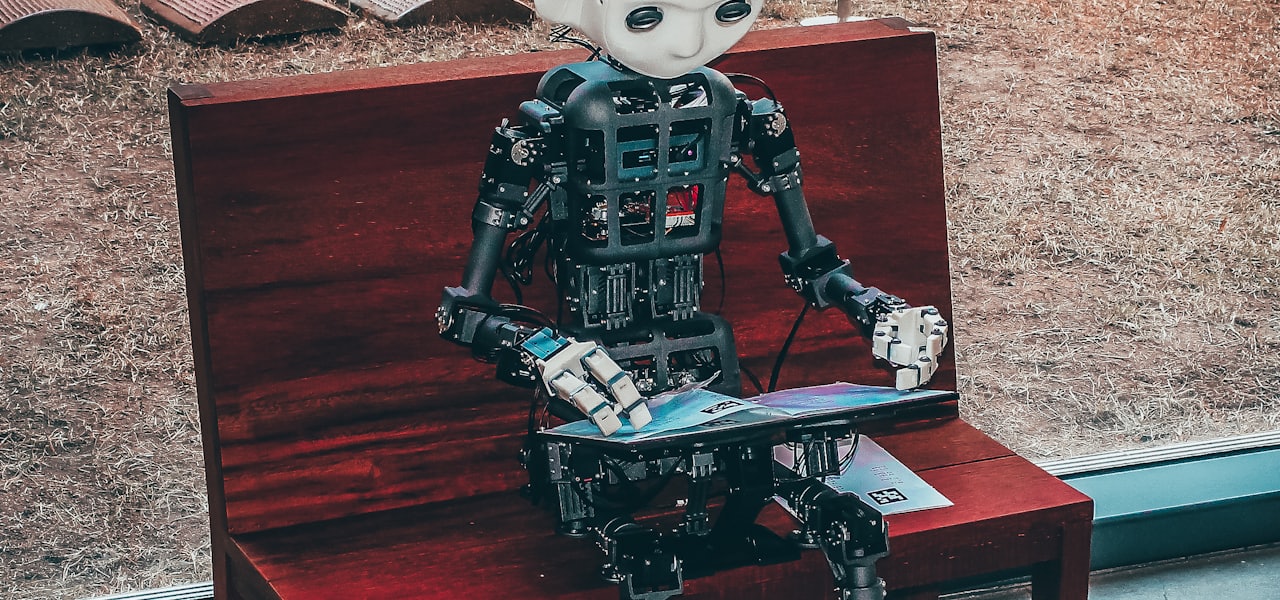
Creepiness is the state of being creepy, or causing an unpleasant feeling of fear or unease to someone and/or something. Certain traits or hobbies may make people seem creepy to others; interest in horror or the macabre might come across as 'creepy', and often people who are perverted or exhibit predatory behavior are called 'creeps'. The internet, especially some functions of social media, has been described as increasingly creepy. Adam Kotsko has compared the modern conception of creepiness to the Freudian concept of unheimlich. The term has also been used to describe paranormal or supernatural phenomena. Some people have phobias which are irrational fears, which can make them perceive something as creepy. == History and studies == "Creepiness" is subjective: for example some dolls have been described as creepy, while what makes something "creepy" or "strange" to someone might seem normal to someone else. The adjective "creepy", referring to a feeling of creeping in the flesh, was first used in 1831, but it was Charles Dickens who coined and popularized the term "the creeps" in his 1849 novel David Copperfield. In the 20th century, association was made between involuntary celibacy and creepiness. The concept of creepiness has only recently been formally addressed in social media marketing. The sensation of creepiness has only recently been the subject of psychological research, despite the widespread colloquial use of the word throughout the years. Francis T. McAndrew of Knox College is the first psychologist to do an empirical study on creepiness. == Causes == The state of creepiness has been associated with "feeling scared, nervous, anxious or worried", "awkward or uncomfortable", "vulnerable or violated" in a study conducted by Watt et al. This state arises in the presence of a creepy element, which can be an individual or, as recently observed, new technologies. === Individuals === Creepiness can be caused by the appearance of an individual. Another study investigated the characteristics that make people creepy. Creepy people were thought to be more often male than female by an overwhelming majority of participants (around 95% of both male and female participants). Another study conducted by Watt et al. also found that participants associated the ectomorphic body type (more linear) with creepiness, more than the other two body types (51% vs mesomorphic, 24% and endomorphic, 23%). Other cues of creepiness included low hygiene, especially according to female participants, and a disheveled appearance. Participants also identified the face as an area with potentially creepy features: in particular the eyes and the teeth. Both of those physical features were deemed creepy not only for their unpleasant appearance (ex. squinty eyes or crooked teeth) but also for the movements and expressions they engaged it (ex. darting eye movements and odd smiles). In fact, appearance does not seem to be the only factor making an individual creepy: behaviors provide cues as well. Behaviors such as "being unusually quiet and staring (34%), following or lurking (15%), behaving abnormally (21%), or in a socially awkward, "sketchy" or suspicious way (20%)" are all contributing to a feeling of creepiness, as described by Watt et al.'s study. === Technology === In addition to other individuals, new technologies, such as marketing's targeted ads and AI, have been qualified as creepy. A study by Moore et al. described what aspect of marketing participants considered creepy. The main three reasons are the following: using invasive tactics, causing discomfort and violating of norms. Invasive tactics are practiced by marketers that know so much about the consumer that the ads are "creepily" personalized. Secondly, some ads create discomfort by making the consumer question "the motives of the company advertising the product". Finally, some ads violate social norms by having inappropriate content, for example by unnecessarily sexualizing it. It is marketing's extensive knowledge used in an improper way, together with a certain loss of control over our data, that creates a feeling of creepiness. Another creepy aspect of technology is human-looking AI: this phenomenon is called the uncanny valley. Humans find robots creepy when they start closely resembling humans. It has been hypothesized that the reason why they are viewed as creepy is because they violate our notion of how a robot should look. A study focusing on children's responses to this phenomenon found evidence to support the hypothesis. == Evolutionary explanation == Several studies have hypothesized that creepiness is an evolutionary response to potentially dangerous situations. It could be linked to a mechanism called agent detection which makes individuals expect malignant agents to be responsible for small changes in the environment. McAndrew et al. illustrates the idea with the example of a person hearing some noises while walking in a dark alley. That person would go in high alert, fearing that some dangerous individual was there. If that was not the case the loss would be small. If, on the other hand, a dangerous individual was actually in the alley and the person had not been alerted by this creepy feeling, the loss could have been significant. Creepiness would therefore serve the purpose of alerting us in situations in which the danger is not outright obvious but rather ambiguous. In this case, ambiguity both refers to the possible presence of a threat and to its nature, sexual or physical for example. Creepiness "may reside in between the unknowing and the fear" in the sense that individuals experiencing it are unsure if there truly is something to fear or not. Creepy characteristics are not simply caused by threat potential: in fact, ectomorphic body types are not the most powerful bodies and facial expressions are not a proxy of physical strength either. Therefore, creepiness is not only related to how threatening a characteristic is, in the sense of how dangerous and strong the individual can be. There are more facets to consider. Another characteristic of creepiness is unpredictable behavior. Unpredictability links back to this idea of ambiguity. When an individual is unpredictable it is not possible to tell when their behavior will turn violent: this adds to the ambiguity of a potentially dangerous situation. This theory is endorsed by studies. Not only is unpredictability directly listed as a creepy characteristic, but other behaviors, such as norm-breaking behaviors are indirectly linked with unpredictability. Such behaviors show that the individual does not conform to some social standards others would expect in a given situation. For example, the aforementioned staring at strangers or lack of hygiene—behaviors that make us uneasy or creeped out because they do not fit the norm and therefore are not expected. More generally, participants tended to define creepiness as "different" in the sense of not behaving, or looking, socially acceptable. Such differences point towards a "social mismatch". Humans have a natural system of detection of such mismatch: a physical feeling of coldness. When an individual is creeped out, they report feeling those "cold chills". This phenomenon has been studied by Leander et al, with relation to nonverbal mimicry in social interactions, meaning the unintentional copying of another's behavior. Inappropriate mimicry may leave a person feeling like something is off about the other. Absence of non-verbal mimicry in a friendly interaction, or the presence of it in a professional setting, raises suspicion as it does not follow the relevant social norms. Individuals are left wondering what other unusual behavior the other might engage in.