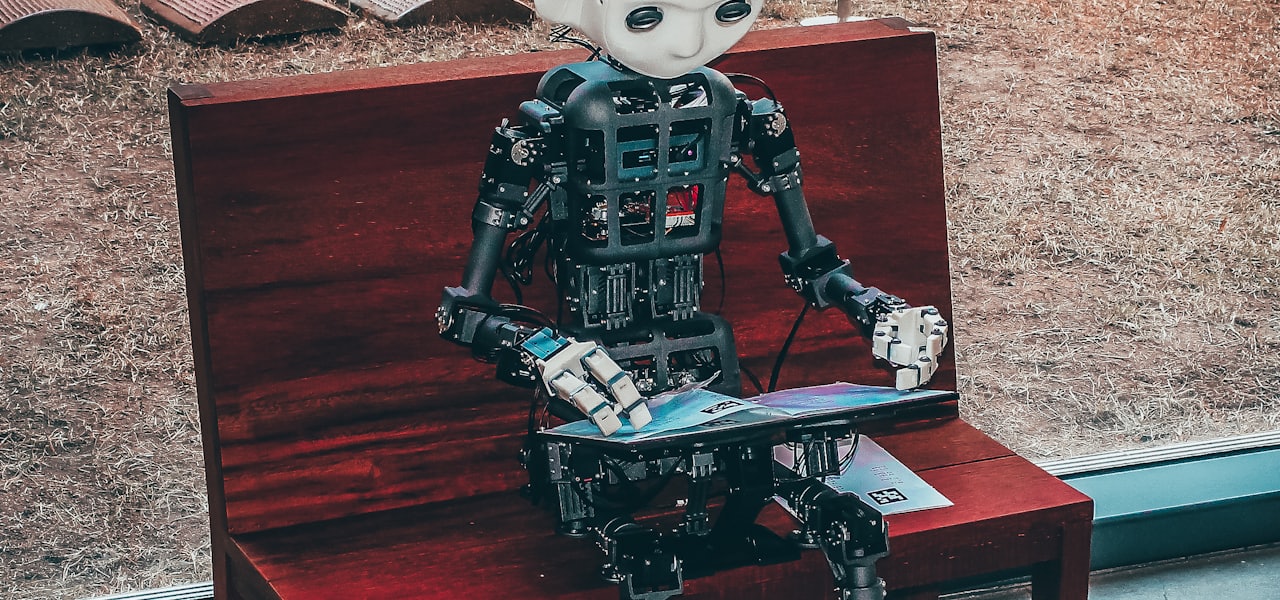
Handwriting recognition (HWR), also known as handwritten text recognition (HTR), is the ability of a computer to receive and interpret intelligible handwritten input from sources such as paper documents, photographs, touch-screens and other devices. The image of the written text may be sensed "off line" from a piece of paper by optical scanning (optical character recognition) or intelligent word recognition. Alternatively, the movements of the pen tip may be sensed "on line", for example by a pen-based computer screen surface, a generally easier task as there are more clues available. A handwriting recognition system handles formatting, performs correct segmentation into characters, and finds the most possible words. == Offline recognition == Offline handwriting recognition involves the automatic conversion of text in an image into letter codes that are usable within computer and text-processing applications. The data obtained by this form is regarded as a static representation of handwriting. Offline handwriting recognition is comparatively difficult, as different people have different handwriting styles. And, as of today, OCR engines are primarily focused on machine printed text and ICR for hand "printed" (written in capital letters) text. === Traditional techniques === ==== Character extraction ==== Offline character recognition often involves scanning a form or document. This means the individual characters contained in the scanned image will need to be extracted. Tools exist that are capable of performing this step. However, there are several common imperfections in this step. The most common is when characters that are connected are returned as a single sub-image containing both characters. This causes a major problem in the recognition stage. Yet many algorithms are available that reduce the risk of connected characters. ==== Character recognition ==== After individual characters have been extracted, a recognition engine is used to identify the corresponding computer character. Several different recognition techniques are currently available. ===== Feature extraction ===== Feature extraction works in a similar fashion to neural network recognizers. However, programmers must manually determine the properties they feel are important. This approach gives the recognizer more control over the properties used in identification. Yet any system using this approach requires substantially more development time than a neural network because the properties are not learned automatically. === Modern techniques === Where traditional techniques focus on segmenting individual characters for recognition, modern techniques focus on recognizing all the characters in a segmented line of text. Particularly they focus on machine learning techniques that are able to learn visual features, avoiding the limiting feature engineering previously used. State-of-the-art methods use convolutional networks to extract visual features over several overlapping windows of a text line image which a recurrent neural network uses to produce character probabilities. == Online recognition == Online handwriting recognition involves the automatic conversion of text as it is written on a special digitizer or PDA, where a sensor picks up the pen-tip movements as well as pen-up/pen-down switching. This kind of data is known as digital ink and can be regarded as a digital representation of handwriting. The obtained signal is converted into letter codes that are usable within computer and text-processing applications. The elements of an online handwriting recognition interface typically include: a pen or stylus for the user to write with a touch sensitive surface, which may be integrated with, or adjacent to, an output display. a software application which interprets the movements of the stylus across the writing surface, translating the resulting strokes into digital text. The process of online handwriting recognition can be broken down into a few general steps: preprocessing, feature extraction and classification The purpose of preprocessing is to discard irrelevant information in the input data, that can negatively affect the recognition. This concerns speed and accuracy. Preprocessing usually consists of binarization, normalization, sampling, smoothing and denoising. The second step is feature extraction. Out of the two- or higher-dimensional vector field received from the preprocessing algorithms, higher-dimensional data is extracted. The purpose of this step is to highlight important information for the recognition model. This data may include information like pen pressure, velocity or the changes of writing direction. The last big step is classification. In this step, various models are used to map the extracted features to different classes and thus identifying the characters or words the features represent. === Hardware === Commercial products incorporating handwriting recognition as a replacement for keyboard input were introduced in the early 1980s. Examples include handwriting terminals such as the Pencept Penpad and the Inforite point-of-sale terminal. With the advent of the large consumer market for personal computers, several commercial products were introduced to replace the keyboard and mouse on a personal computer with a single pointing/handwriting system, such as those from Pencept, CIC and others. The first commercially available tablet-type portable computer was the Write-Top from Linus Technologies, released in July 1988. Its operating system was based on MS-DOS. In the early 1990s, hardware makers including NCR, IBM and EO released tablet computers running the PenPoint operating system developed by GO Corp. PenPoint used handwriting recognition and gestures throughout and provided the facilities to third-party software. IBM's tablet computer was the first to use the ThinkPad name and used IBM's handwriting recognition. This recognition system was later ported to Microsoft Windows for Pen Computing, and IBM's Pen for OS/2. None of these were commercially successful. Advancements in electronics allowed the computing power necessary for handwriting recognition to fit into a smaller form factor than tablet computers, and handwriting recognition is often used as an input method for hand-held PDAs. The first PDA to provide written input was the Apple Newton, which exposed the public to the advantage of a streamlined user interface. However, the device was not a commercial success, owing to the unreliability of the software, which tried to learn a user's writing patterns. By the time of the release of the Newton OS 2.0, wherein the handwriting recognition was greatly improved, including unique features still not found in current recognition systems such as modeless error correction, the largely negative first impression had been made. After discontinuation of Apple Newton, the feature was incorporated in Mac OS X 10.2 and later as Inkwell. Palm later launched a successful series of PDAs based on the Graffiti recognition system. Graffiti improved usability by defining a set of "unistrokes", or one-stroke forms, for each character. This narrowed the possibility for erroneous input, although memorization of the stroke patterns did increase the learning curve for the user. The Graffiti handwriting recognition was found to infringe on a patent held by Xerox, and Palm replaced Graffiti with a licensed version of the CIC handwriting recognition which, while also supporting unistroke forms, pre-dated the Xerox patent. The court finding of infringement was reversed on appeal, and then reversed again on a later appeal. The parties involved subsequently negotiated a settlement concerning this and other patents. A Tablet PC is a notebook computer with a digitizer tablet and a stylus, which allows a user to handwrite text on the unit's screen. The operating system recognizes the handwriting and converts it into text. Windows Vista and Windows 7 include personalization features that learn a user's writing patterns or vocabulary for English, Japanese, Chinese Traditional, Chinese Simplified and Korean. The features include a "personalization wizard" that prompts for samples of a user's handwriting and uses them to retrain the system for higher accuracy recognition. This system is distinct from the less advanced handwriting recognition system employed in its Windows Mobile OS for PDAs. Although handwriting recognition is an input form that the public has become accustomed to, it has not achieved widespread use in either desktop computers or laptops. It is still generally accepted that keyboard input is both faster and more reliable. As of 2006, many PDAs offer handwriting input, sometimes even accepting natural cursive handwriting, but accuracy is still a problem, and some people still find even a simple on-screen keyboard more efficient. === Software === Early software could understand print handwriting where the characters were separated; however, cursive handwriting
ACL Data Collection Initiative
The ACL Data Collection Initiative (ACL/DCI) was a project established in 1989 by the Association for Computational Linguistics (ACL) to create and distribute large text and speech corpora for computational linguistics research. The initiative aimed to address the growing need for substantial text databases that could support research in areas such as natural language processing, speech recognition, and computational linguistics. By 1993, the initiative’s activities had effectively ceased, with its functions and datasets absorbed by the Linguistic Data Consortium (LDC), which was founded in 1992. == Objectives == The ACL/DCI had several key objectives: To acquire a large and diverse text corpus from various sources To transform the collected texts into a common format based on the Standard Generalized Markup Language (SGML) To make the corpus available for scientific research at low cost with minimal restrictions To provide a common database that would allow researchers to replicate or extend published results To reduce duplication of effort among researchers in obtaining and preparing text data These objectives were designed to address the growing demand for very large amounts of text arising from applications in recognition and analysis of text and speech. Its core objective was to "oversee the acquisition and preparation of a large text corpus to be made available for scientific research at cost and without royalties". == History == By the late 1980s, researchers in computational linguistics and speech recognition faced a significant problem: the lack of large-scale, accessible text corpora for developing statistical models and testing algorithms. Existing generally available text databases were too small to meet the needs of developing applications in text and speech recognition. The initiative was formed to meet this need by collecting, standardizing, and distributing large quantities of text data with minimal restrictions for scientific research. As stated by Liberman (1990), "research workers have been severely hampered by the lack of appropriate materials, and specially by the lack of a large enough body of text on which published results can be replicated or extended by others." The ACL/DCI committee was established in February 1989. The committee included members from academic and industrial research laboratories in the United States and Europe. The initiative was chaired by Mark Liberman from the University of Pennsylvania (formerly of AT&T Bell Laboratories). Other committee members included representatives from organizations such as Bellcore, IBM T.J. Watson Research Center, Cambridge University, Virginia Polytechnic Institute & State University, Northeastern University, University of Pennsylvania, SRI International, MCC, Xerox PARC, ISSCO, and University of Pisa. The project operated initially without dedicated funding, relying on volunteer efforts from committee members and their affiliated institutions. Key supporters included AT&T Bell Labs, Bellcore, IBM, Xerox, and the University of Pennsylvania, which allowed the use of their computing facilities for ACL/DCI-related work. Previously running on volunteer effort pro bono, in 1991, it obtained funding from General Electric and the National Science Foundation (IRI-9113530). == Data == As of 1990, the ACL/DCI had collected hundreds of millions of words of diverse text. The collection included: Wall Street Journal articles (25 to 50 million words); Canadian Hansard (parliamentary records) in parallel English and French versions: cleaned-up English Hansard donated by the IBM alignment models group (100 million words), and original Bilingual Hansard (from a different time period) obtained directly (200 million words). Collins English Dictionary (1979 edition), both as fulltext (3 million words) and as various "database" versions, constructed using "typographers' tape" donated by Collins, which were computer tapes containing the structured digital data used to typeset and print the 1979 edition of the dictionary; Emails from ARPANET newsletters for the ACM Special Interest Group on Information Retrieval Forum (IRLIST) and AIList Digest issues distributed over the ARPANET (AILIST) (5 million words), both collected by Edward A. Fox at VIPSU; Articles on networking (2 million words); U.S. Department of Agriculture Extension Service Fact Sheets (>1 million words); 200,000 scientific abstracts of about 1,500 words each from the Department of Energy (25 million words); Archives of the Challenger Investigation Commission, including transcripts of depositions and hearings (2.5 million words); Books from the Library of America, including works by Mark Twain, Eugene O'Neill, Ralph Waldo Emerson, Herman Melville, W.E.B. DuBois, Willa Cather, and Benjamin Franklin (130 books, 20 million words); Public domain books like the King James Bible, Tristram Shandy, The Federalist Papers; Several million words of transcribed radiologists' reports, donated by Francis Ganong at Kurzweil Applied Intelligence Inc (about 5 million words); The Child Language Data Exchange corpus of child language acquisition transcripts; U.S. Department of Justice Justice Retrieval and Inquiry System (JURIS) materials; The Swiss Civil Code in parallel German, French and Italian; Economic reports from the Union Bank of Switzerland, in parallel English, German, French and Italian; About 12K words of administrative policy manuals and 14K words of administrative memos, contributed by Geoff Pullum of U.C.S.C.; Material from various ACM journals and the ACL journal Computational Linguistics; The CSLI publications series: 50-100 reports (8K words each) and 5-10 books (80K words each). The initiative started with North American English text but expanded to include Canadian French and planned to include Japanese, Chinese, and other Asian languages. At least 5 million words from the collection were tagged under the Penn Treebank project, and those tags were distributed by DCI as well. After DCI was absorbed by the LDC, the datasets were curated under LDC. == Format == The ACL/DCI corpus was coded in a standard form based on SGML (Standard Generalized Markup Language, ISO 8879), consistent with the recommendations of the Text Encoding Initiative (TEI), of which the DCI was an affiliated project. The TEI was a joint project of the ACL, the Association for Computers and the Humanities, and the Association for Literary and Linguistic Computing, aiming to provide a common interchange format for literary and linguistic data. The initiative planned to add annotations reflecting consensually approved linguistic features like part of speech and various aspects of syntactic and semantic structure over time. == Examples == As an example of the use of ACL/DCI, consider the Wall Street Journal (WSJ) corpus for speech recognition research. The WSJ corpus was used as the basis for the DARPA Spoken Language System (SLS) community's Continuous Speech Recognition (CSR) Corpus. The WSJ corpus became a standard benchmark for evaluating speech recognition systems and has been used in numerous research papers. The WSJ CSR Corpus provided DARPA with its first general-purpose English, large vocabulary, natural language, high perplexity corpus containing speech (400 hours) and text (47 million words) during 1987–89. The text corpus was 313 MB in size. The text was preprocessed to remove ambiguity in the word sequence that a reader might choose, ensuring that the unread text used to train language models was representative of the spoken test material. The preprocessing included converting numbers into orthographics, expanding abbreviations, resolving apostrophes and quotation marks, and marking punctuation. As another example, the Yarowsky algorithm used bitext data from DCI to train a simple word-sense disambiguation model that was competitive with advanced models trained on smaller datasets. == Distribution == Materials from the ACL/DCI collection were distributed to research groups on a non-commercial basis. By 1990, about 25 research groups and individual researchers had received tapes containing various portions of the collected material. To obtain the data, researchers had to sign an agreement not to redistribute the data or make direct commercial use of it. However, commercial application of "analytical materials" derived from the text, such as statistical tables or grammar rules, was explicitly permitted. The initiative first distributed data via 12-inch reels of 9-track tape, then via CD-ROMs. Each such tape could contain 30 million words compressed via the Lempel-Ziv algorithms. The first CD-ROM distribution was in 1991, funded by Dragon Systems Inc. It contained Collins English Dictionary, WSJ, scientific abstracts provided by the U.S. Department of Energy, and the Penn Treebank.
Scientific Working Group – Imaging Technology
The Scientific Working Group on Imaging Technology was convened by the Federal Bureau of Investigation in 1997 to provide guidance to law enforcement agencies and others in the criminal justice system regarding the best practices for photography, videography, and video and image analysis. This group was terminated in 2015. == History == As technology has advanced through the years, law enforcement has needed to stay abreast of emerging technological advances and use these in the investigation of crime. A factor that is considered when new technology is used in these investigations is the determination of whether the use of that new technology will be admissible in court. The judicial system in the United States currently has two standards used in the determination of admissibility of testimony regarding scientific evidence; the Daubert Standard and the Frye Standard. These standards guide the courts in the admissibility of testimony derived from the use of new technologies and scientific techniques. The Federal Bureau of Investigation (FBI), seeking to address possible admissibility issues with such testimony, established Scientific Working Groups starting with the Scientific Working Group on DNA Analysis and Methods (SWGDAM) in 1988. The goal of these groups is to open lines of communication between law enforcement agencies and forensic laboratories around the world while providing guidance on the use of new and innovative technologies and techniques. This guidance can lead to admissibility of evidence and/or testimony, provided proper methods in the collection of evidence and its analysis are employed. In 2009, the National Academy of Sciences released a report entitled, "Strengthening Forensic Science in the United States: A Path Forward." This report addresses many topics including challenges and disparities facing the forensic science community, standardization, certification of practitioners and accreditation of their respective entities, problems related to the interpretation of forensic evidence, the need for research, and the admission of forensic science evidence in litigation. This report mentions the Scientific Working Groups and their role in forensic science. The history of imaging technology (photography) can be said to extend back to the times of Chinese philosopher Mo-Ti (470-390 B.C.) who described the principles behind the precursor to the camera obscura. Since that time, advances in imaging technology include the discovery of chemical photographic processes in the 19th century and the use of electronic imaging technology that includes analog video cameras and digital video and still cameras. By the mid 1990s, it was apparent that technologically advanced camera systems such as these were being adopted for use in the criminal justice system. This led the FBI to convene a meeting of individuals working in the field of forensic imaging from federal, state, local, and foreign law enforcement, and the U.S. military, during the summer of 1997. As a result of this meeting, the Technical Working Group on Imaging Technology was formed from a core group of the meeting’s participants. This group later became the Scientific Working Group on Imaging Technology (SWGIT). Prior to the inception of SWGIT, some law enforcement agencies began adopting digital imaging technology. Due to the lack of guidelines or standards, some of these agencies attempted to replace all their film cameras with substandard digital cameras, only to find that the equipment they had purchased was not capable of accomplishing the mission for which they were intended. At that time only low resolution digital cameras were deemed affordable by some law enforcement agencies. Some of these agencies were forced to rethink their photography procedures and reverted to the use of film cameras or replaced their low-resolution digital cameras with higher quality, more expensive equipment. Also lacking at this early stage was guidance on how to store and archive digital image files. When SWGIT was formed, it was tasked with providing guidance to law enforcement and others in the criminal justice system by releasing documents that describe the best practices and guidelines for the use of imaging technology, to include these concerns and many others. This group was terminated in 2015. == SWGIT Function == During its existence, SWGIT provided information on the appropriate use of various imaging technologies including both established and new. This was accomplished through the release of documents such as the SWGIT Best Practices documents. As changes in technology occurred, these documents were updated. Over the course of its existence, SWGIT collaborated with other Scientific Working Groups to address imaging concerns within their respective disciplines. SWGIT published over 20 documents that dealt specifically with imaging technology. SWGIT also co-published documents with the Scientific Working Group on Digital Evidence (SWGDE) that had a component or components dealing with imaging technology. SWGIT also provided imaging technology guidance and input for documents from the Scientific Working Group on Friction Ridge Analysis, Study and Technology (SWGFAST), the Scientific Working Group for Forensic Document Examination (SWGDOC), and the Scientific Working Group on Shoeprint and Tire Tread Evidence (SWGTREAD). SWGIT assisted the American Society of Crime Lab Directors/Laboratory Accreditation Board (ASCLD/LAB) in the writing of definitions and standards for the accreditation of Digital and Multimedia Evidence sections of crime laboratories. In addition to releasing documents, SWGIT members disseminated best practices for law enforcement professionals where imaging technology was concerned. This was carried out by attending and lecturing at meetings and conferences of various forensic organizations that included: The American Academy of Forensic Sciences (AAFS) The International Association for Identification (IAI) The Law Enforcement and Emergency Services Video Association (LEVA) The American Society of Crime Lab Directors (ASCLD) The SWGIT membership consisted of approximately fifty scientists, photographers, instructors, and managers from more than two dozen federal, state, and local law enforcement agencies, as well as from the academic and research communities. The membership elected its officers from within. SWGIT was composed of the Executive Committee, four standing subcommittees, and ad hoc subcommittees appointed on an as-needed basis. The standing subcommittees were: Image Analysis, Forensic Photography, Video, and Outreach. This group was terminated in 2015. == Legal Proceedings == The following court cases have conducted Daubert v. Merrell Dow Pharm., Inc., 509 U.S. 579 (1993) hearings in which SWGIT best practice documents have been cited as accepted protocol, methodology, and as generally accepted techniques in the forensic community: U. S. v. Rudy Frabizio, U.S. District Court, Boston, MA, 2008 (Image Authentication) U.S. v. Nobumochi Furukawa, U.S. District Court, Minnesota, 2007 (Video Authentication) U.S. v. John Stroman, U.S. District Court, South Carolina, 2007 (Facial Comparison Analysis) State of Texas v. Daniel Day, Tarrant County Texas, 2005 (Camera Identification to Images) U.S. v. Marc Watzman, U.S. District Court, Northern Illinois, 2004 (Video Authentication) U.S. v. McKreith, U.S. District Court, Fort Lauderdale, FL, 2002 (Photo comparison of shirt) == Termination == This group was unfunded by the FBI in 2015.
Polynomial texture mapping
Polynomial texture mapping (PTM), also known as Reflectance Transformation Imaging (RTI), is a technique of imaging and interactively displaying objects under varying lighting conditions to reveal surface phenomena. The data acquisition method is single camera multi light (SCML). == Origins == The method was originally developed by Tom Malzbender of HP Labs in order to generate enhanced 3D computer graphics and it has since been adopted for cultural heritage applications. == Methodology == A series of images is captured in a darkened environment with the camera in a fixed position and the object lit from different angles (Single Camera Multi Light). Interactive software processes and combines the set of images to enable the user inspecting the object to control a virtual light source. The virtual light source may be manipulated to simulate light from different angles and of different intensity or wavelengths to illuminate the surface of artefacts and reveal details. Open-source tools for processing the captured images and publishing the resulting relightable images on the web are freely available. == Applications == Polynomial texture mapping may be used for detailed recording and documentation, 3D modeling, edge detection, and to aid the study of inscriptions, rock art and other artefacts. It has been applied to hundreds of the Vindolanda tablets by the Centre for the Study of Ancient Documents at the University of Oxford in conjunction with the British Museum. It has also been deployed, by Ben Altshuler of the Institute for Digital Archaeology, to scan the Philae obelisk at Kingston Lacy and the Parian Chronicle at the Ashmolean Museum; in both cases scans revealed significant, previously illegible text. Method was also used for identifying microscopic worked antler from Star Carr and recording ancient rock art in Armenia. A 'dome' supporting twenty-four lights has been used to image paintings in the National Gallery and produce polynomial texture maps, providing information on condition phenomena for conservation purposes. Studies of the technique at the National Gallery and Tate concluded that it is an effective tool for documenting changes in the condition of paintings, more easily repeatable than raking light photography, and therefore could be used to assess paintings during structural treatment and before and after loan. Twelve dome-based systems built by the University of Southampton have been used to capture thousands of cuneiform tablets at various museums. The technique is now also finding uses in the field of forensic science, for example in imaging footprints, tyre marks, and indented writing.
Desktop video
Desktop video refers to a phenomenon lasting from the mid-1980s to the early 1990s when the graphics capabilities of personal computers such as the Amiga, Macintosh II, and specially-upgraded IBM PC compatibles had advanced to the point where individuals and local broadcasters could use them for analog non-linear editing and vision mixing in video production. Despite the use of computers, desktop video should not be confused with digital video since the video data remained analog, and it uses items like a VCR and a camcorder to record the video. Full-screen, full-motion video's vast storage requirements meant that the promise of digital encoding would not be realized on desktop computers for at least another decade. == Description == There were multiple models of genlock cards available to synchronize the content; the Newtek Video Toaster was commonly used in Amiga in countries that used NTSC (PAL-M in Brazil), while PCs had Truevision and Matrox Illuminator cards and Mac systems had the SuperMac Video Spigot and Radius VideoVision cards. Apple later introduced the Macintosh Quadra 840AV and Centris 660AV systems to specifically address this market. Desktop video was a parallel development to desktop publishing and enabled many small production houses and local TV stations to produce their own original content for the first time. Along with the advent of public-access cable channels, desktop video meant that television advertising became affordable for local businesses such as retailers, restaurants, real estate agents, contractors and auto dealers. As with the phrase desktop publishing, use of the term died out as the technologies to which it referred become the norm for any kind of video production.
.ai
.ai is the Internet country code top-level domain (ccTLD) for Anguilla, a British Overseas Territory in the Caribbean. It is administered by the government of Anguilla. It is a popular domain hack with companies and projects related to the artificial intelligence industry (AI). Google's ad targeting treats .ai as a generic top-level domain (gTLD) because "users and website owners frequently see [the domain] as being more generic than country-targeted." In 2021, Google Search analyst Gary Illyes announced that ".ai" had been added to Google’s list of generic country-code top-level domains, meaning that Google would no longer infer Anguilla-specific targeting from the ccTLD. Identity Digital began managing the domain as of January 2025. == Second and third level registrations == Registrations within off.ai, com.ai, net.ai, and org.ai are available worldwide without restriction. From 15 September 2009, second level registrations within .ai are available to everyone worldwide. == Registration == The minimum registration term allowed for .ai domains is 2 through 10 years for registration and renewal, and a 2-year renewal for domain transfer. Identity Digital is the authority in charge of managing this extension. Registrations began on 16 February 1995. The limits on the number of characters used for the domain name are, at a minimum, from 1 to 3, depending on the registrar, and always at most 63 characters. The character set supported for .ai domain names includes A–Z, a–z, 0–9, and hyphen. As of November 2022, .ai domains cannot accommodate IDN characters. There are no requirements for registering a domain, including local and foreign residents. A .ai domain can be suspended or revoked, if the domain is involved in illegal activity such as violating trademarks or copyrights. Usage must not violate the laws of Anguilla. Anguilla uses the UDRP. Filing a UDRP challenge requires using one of the ICANN Approved Dispute Resolution Service Providers. If the domain is with an ICANN accredited registrar, they should work with the arbitrator. Usually this means either doing nothing or transferring a domain. .ai domains are transferable to any desired registrars as the registration of domain is done maintaining EPP. There used to be a whois.ai-based platform of expired domains in which those could be procured and auctioned every ten days through a standard online process. The last auctions of such kind closed there in December 2024; the platform had been scheduled for shutdown on 30 June 2025, but remained online in the months following that date. == Valuation == Domains cost depends on the registrar, with yearly fees ranging from US$140 (the base fee, as established by Anguilla) to $200. As of July 2025, the highest-valued .ai domain is an undisclosed one sold on 8 November 2023, on Escrow.com, for US$1,500,000—months after an initial $300,000 sale to the same buyer. Among the publicly disclosed ones, the most valued, fin.ai, was sold for $1,000,000 in March 2025. On 16 December 2017, the .ai registry started supporting the Extensible Provisioning Protocol (EPP) and migrated all of its domains onto an EPP system. Consequently, many registrars are allowed to sell .ai domains. Since that date, the .ai ccTLD has also been popular with artificial intelligence companies and organisations. Though such trends are primarily seen among new AI based companies or startups, many established AI and Tech companies preferred not to opt for .ai domains. For example, DeepMind has its domain retained at .com; Meta has redirected its facebook.ai domain to ai.meta.com. == Impact on Anguilla's economy == The registration fees earned from the .ai domains go to the treasury of the Government of Anguilla. As per a 2018 New York Times report, the total revenue generated out of selling .ai domains was $2.9 million. In 2023, Anguilla's government made about US$32 million from fees collected for registering .ai domains; that amounted to over 10% of gross domestic product for the territory. "In the years before the real breakthrough of AI, revenue from .ai domains made up less than 1% of our state income, by 2025 it will be around 47%," explained Jose Vanterpool, Minister of Infrastructure and Communications (MICUHITES), in an interview with BBC. The high 90% renewal rate of .ai domains and the 2025 renewal wave of domains registered in 2023 are driving another surge in state revenues, according to Domaintechnik.
Cyborg
A cyborg () is a being with both organic and biomechatronic body parts. It is a portmanteau of cybernetic and organism. The term was coined in 1960 by Manfred Clynes and Nathan S. Kline. In contrast to biorobots and androids, the term cyborg applies to a living organism that has undergone restoration of function or enhancements of abilities due to the integration of some artificial component or technology that relies on feedback. == Description and definition == Alternative names for a cyborg include cybernetic organism, cyber-organism, cyber-organic being, cybernetically enhanced organism, cybernetically augmented organism, technorganic being, techno-organic being, and techno-organism. Unlike bionics, biorobotics, or androids, a cyborg is an organism that has restored function or, especially, enhanced abilities due to the integration of some artificial component or technology that relies on some sort of feedback, for example: prostheses, artificial organs, implants or, in some cases, wearable technology. Cyborg technologies may enable or support collective intelligence. A related idea is the "augmented human". While cyborgs are commonly thought of as mammals, including humans, the term can apply to any organism. === Placement and distinctions === D. S. Halacy's Cyborg: Evolution of the Superman (1965) featured an introduction which spoke of a "new frontier" that was "not merely space, but more profoundly the relationship between 'inner space' to 'outer space' – a bridge...between mind and matter." In "A Cyborg Manifesto", Donna Haraway rejects the notion of rigid boundaries between humanity and technology, arguing that, as humans depend on more technology over time, humanity and technology have become too interwoven to draw lines between them. She believes that since we have allowed and created machines and technology to be so advanced, there should be no reason to fear what we have created, and cyborgs should be embraced because they are part of human identities. However, Haraway has also expressed concern over the contradictions of scientific objectivity and the ethics of technological evolution, and has argued that "There are political consequences to scientific accounts of the world." === Biosocial definition === According to some definitions of the term, the physical attachments that humans have with even the most basic technologies have already made them cyborgs. In a typical example, a human with an artificial cardiac pacemaker or implantable cardioverter-defibrillator would be considered a cyborg, since these devices measure voltage potentials in the body, perform signal processing, and can deliver electrical stimuli, using a synthetic feedback mechanism to keep that person alive. Implants, especially cochlear implants, that combine mechanical modification with any kind of feedback response are also cybernetic enhancements. Some theorists cite such modifications as contact lenses, hearing aids, smartphones, or intraocular lenses as examples of fitting humans with technology to enhance their biological capabilities. The emerging trend of implanting microchips inside the body (mainly the hands), to make financial operations like a contactless payment, or basic tasks like opening a door, has been erroneously marketed as more recent examples of cybernetic enhancement. The latter has not yet seen significant traction outside niche areas in Scandinavia and in actual function is little more than a pre-programmed Radio-frequency identification (RFID) microchip encased in glass that does not interact with the human body (it is the same technology used in the microchips injected into animals for ease of identification), thus not fitting the definition of a cybernetic implant. As cyborgs currently are on the rise, some theorists argue there is a need to develop new definitions of aging. For instance, a bio-techno-social definition of aging has been suggested. The term is also used to address human-technology mixtures in the abstract. This includes not only commonly used pieces of technology such as phones, computers, the Internet, and so on, but also artifacts that are not usually considered technology; for example, pen and paper, and speech and language. When augmented with these technologies and connected in communication with people in other times and places, a person becomes capable of more than they were before. An example is a computer, which gains power by using Internet protocols to connect with other computers. Another example is a social-media bot—either a bot-assisted human or a human-assisted-bot—used to target social media with likes and shares. Cybernetic technologies thus include highways, pipes, electrical wiring, buildings, electrical plants, libraries, and other infrastructural constructs. Bruce Sterling, in his Shaper/Mechanist universe, suggested an idea of an alternative cyborg called 'Lobster', which is made not by using internal implants, but by using an external shell (e.g. a powered exoskeleton). The computer game Deus Ex: Invisible War prominently features cyborgs called Omar, Russian for 'lobster'. === Evolutionary perspective === In 1994, Hans Hass formulated a scientific view of the human-machine hybrids he called "hypercells". They can expand their biological cell body with artificial artifacts and thus expand their performance body. The theory of hypercells or Homo proteus, as Hass called the human-machine hybrid to distinguish Homo sapiens, extends Charles Darwin's theory of evolution and deals with the course of evolution beyond humans. In his 2019 book Novacene, James Lovelock used the term "cyborgs" to refer to the next generation of beings who will become the "understanders of the future" and "lead the cosmos to self-knowledge". While acknowledging the organic component in Clynes' and Kline's definition, he proposed that these cyborgs "will have designed and built themselves from the artificial intelligence systems we have already constructed", and used the term cyborg "to emphasize that the new intelligent beings will have arisen, like us, from Darwinian evolution." == Origins == The concept of a man-machine mixture was widespread in science fiction before World War II. As early as 1843, Edgar Allan Poe described a man with extensive prostheses in the short story "The Man That Was Used Up". In 1911, Jean de La Hire introduced the Nyctalope, a science fiction hero who was perhaps the first literary cyborg, in Le Mystère des XV (later translated as The Nyctalope on Mars). Nearly two decades later, Edmond Hamilton presented space explorers with a mixture of organic and machine parts in his 1928 novel The Comet Doom. He later featured the talking, living brain of an old scientist, Simon Wright, floating in a transparent case, and in all the adventures of his famous hero, Captain Future. In 1944, in the short story "No Woman Born", C. L. Moore wrote of Deirdre, a dancer, whose body was burned completely and whose brain was placed in a faceless but beautiful and supple mechanical body. In 1960, the term "cyborg" was coined by Manfred E. Clynes and Nathan S. Kline to refer to their conception of an enhanced human being who could survive in extraterrestrial environments: For the exogenously extended organizational complex functioning as an integrated homeostatic system unconsciously, we propose the term 'Cyborg'. Their concept was the outcome of thinking about the need for an intimate relationship between human and machine as the new frontier of space exploration was beginning to develop. A designer of physiological instrumentation and electronic data-processing systems, Clynes was the chief research scientist in the Dynamic Simulation Laboratory at Rockland State Hospital in New York. The term first appears in print 5 months earlier when The New York Times reported on the "Psychophysiological Aspects of Space Flight Symposium" where Clynes and Kline first presented their paper: A cyborg is essentially a man-machine system in which the control mechanisms of the human portion are modified externally by drugs or regulatory devices so that the being can live in an environment different from the normal one. Thereafter, Hamilton would first use the term "cyborg" explicitly in the 1962 short story, "After a Judgment Day", to describe the "mechanical analogs" called "Charlies," explaining that "[c]yborgs, they had been called from the first one in the 1960s...cybernetic organisms." The 1972 novel Cyborg by Martin Caidin introduced the character of bionic government agent Steve Austin, and was adapted into the popular television series The Six Million Dollar Man, which ran from 1973 to 1978. In 2001, a book titled Cyborg: Digital Destiny and Human Possibility in the Age of the Wearable computer was published by Doubleday. Some of the ideas in the book were incorporated into the documentary film Cyberman that same year. == Cyborg tissues in engineering == Cyborg tissues structured with carbon nanotubes and plan