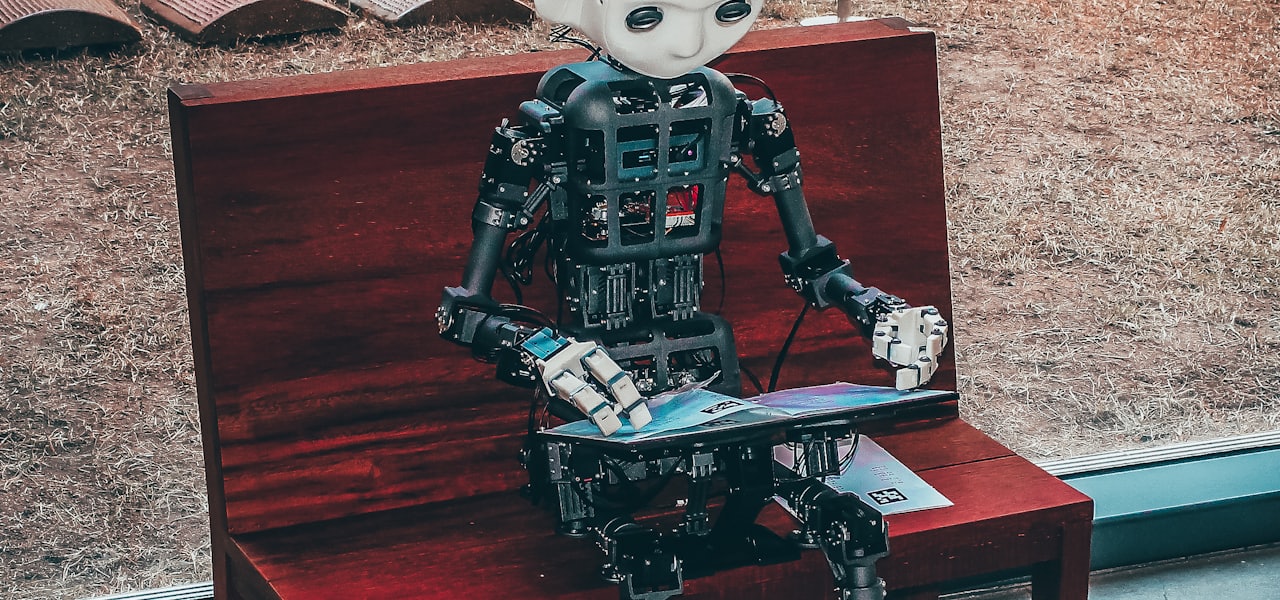
The IJCAI Computers and Thought Award is presented every two years by the International Joint Conference on Artificial Intelligence (IJCAI), recognizing outstanding young scientists in artificial intelligence. It was originally funded with royalties received from the book Computers and Thought (edited by Edward Feigenbaum and Julian Feldman), and is currently funded by IJCAI. It is considered to be "the premier award for artificial intelligence researchers under the age of 35". == Laureates == Terry Winograd (1971) Patrick Winston (1973) Chuck Rieger (1975) Douglas Lenat (1977) David Marr (1979) Gerald Sussman (1981) Tom Mitchell (1983) Hector Levesque (1985) Johan de Kleer (1987) Henry Kautz (1989) Rodney Brooks (1991) Martha E. Pollack (1991) Hiroaki Kitano (1993) Sarit Kraus (1995) Stuart Russell (1995) Leslie Kaelbling (1997) Nicholas Jennings (1999) Daphne Koller (2001) Tuomas Sandholm (2003) Peter Stone (2007) Carlos Guestrin (2009) Andrew Ng (2009) Vincent Conitzer (2011) Malte Helmert (2011) Kristen Grauman (2013) Ariel D. Procaccia (2015) Percy Liang (2016) for his contributions to both the approach of semantic parsing for natural language understanding and better methods for learning latent-variable models, sometimes with weak supervision, in machine learning. Devi Parikh (2017) Stefano Ermon (2018) Guy Van den Broeck (2019) for his contributions to statistical and relational artificial intelligence, and the study of tractability in learning and reasoning. Piotr Skowron (2020) for his contributions to computational social choice, and to the theory of committee elections. Fei Fang (2021) for her contributions to integrating machine learning with game theory and the use of these novel techniques to tackle societal challenges such as more effective deployment of security resources, enhancing environmental sustainability, and reducing food insecurity. Bo Li (2022) for her contributions to uncovering the underlying connections among robustness, privacy, and generalization in AI, showing how different models are vulnerable to malicious attacks, and how to eliminate these vulnerabilities using mathematical tools that provide robustness guarantees for learning models and privacy protection. Pin-Yu Chen (2023) for his contributions to consolidating properties of trust, robustness and safety into rigorous algorithmic procedures and computable metrics for improving AI systems. Nisarg Shah (2024) for his contributions to AI and society, in particular foundational work on the theory of algorithmic fairness using principles from social choice theory. Aditya Grover (2025) for his foundational contributions uniting deep generative models, representation learning, and reinforcement learning, and for their applications in advancing scientific reasoning.
Ontology learning
Ontology learning (ontology extraction, ontology augmentation generation, ontology generation, or ontology acquisition) is the automatic or semi-automatic creation of ontologies, including extracting the corresponding domain's terms and the relationships between the concepts that these terms represent from a corpus of natural language text, and encoding them with an ontology language for easy retrieval. As building ontologies manually is extremely labor-intensive and time-consuming, there is great motivation to automate the process. Typically, the process starts by extracting terms and concepts or noun phrases from plain text using linguistic processors such as part-of-speech tagging and phrase chunking. Then statistical or symbolic techniques are used to extract relation signatures, often based on pattern-based or definition-based hypernym extraction techniques. == Procedure == Ontology learning (OL) is used to (semi-)automatically extract whole ontologies from natural language text. The process is usually split into the following eight tasks, which are not all necessarily applied in every ontology learning system. === Domain terminology extraction === During the domain terminology extraction step, domain-specific terms are extracted, which are used in the following step (concept discovery) to derive concepts. Relevant terms can be determined, e.g., by calculation of the TF/IDF values or by application of the C-value / NC-value method. The resulting list of terms has to be filtered by a domain expert. In the subsequent step, similarly to coreference resolution in information extraction, the OL system determines synonyms, because they share the same meaning and therefore correspond to the same concept. The most common methods therefore are clustering and the application of statistical similarity measures. === Concept discovery === In the concept discovery step, terms are grouped to meaning bearing units, which correspond to an abstraction of the world and therefore to concepts. The grouped terms are these domain-specific terms and their synonyms, which were identified in the domain terminology extraction step. === Concept hierarchy derivation === In the concept hierarchy derivation step, the OL system tries to arrange the extracted concepts in a taxonomic structure. This is mostly achieved with unsupervised hierarchical clustering methods. Because the result of such methods is often noisy, a supervision step, e.g., user evaluation, is added. A further method for the derivation of a concept hierarchy exists in the usage of several patterns that should indicate a sub- or supersumption relationship. Patterns like “X, that is a Y” or “X is a Y” indicate that X is a subclass of Y. Such pattern can be analyzed efficiently, but they often occur too infrequently to extract enough sub- or supersumption relationships. Instead, bootstrapping methods are developed, which learn these patterns automatically and therefore ensure broader coverage. === Learning of non-taxonomic relations === In the learning of non-taxonomic relations step, relationships are extracted that do not express any sub- or supersumption. Such relationships are, e.g., works-for or located-in. There are two common approaches to solve this subtask. The first is based upon the extraction of anonymous associations, which are named appropriately in a second step. The second approach extracts verbs, which indicate a relationship between entities, represented by the surrounding words. The result of both approaches need to be evaluated by an ontologist to ensure accuracy. === Rule discovery === During rule discovery, axioms (formal description of concepts) are generated for the extracted concepts. This can be achieved, e.g., by analyzing the syntactic structure of a natural language definition and the application of transformation rules on the resulting dependency tree. The result of this process is a list of axioms, which, afterwards, is comprehended to a concept description. This output is then evaluated by an ontologist. === Ontology population === At this step, the ontology is augmented with instances of concepts and properties. For the augmentation with instances of concepts, methods based on the matching of lexico-syntactic patterns are used. Instances of properties are added through the application of bootstrapping methods, which collect relation tuples. === Concept hierarchy extension === In this step, the OL system tries to extend the taxonomic structure of an existing ontology with further concepts. This can be performed in a supervised manner with a trained classifier or in an unsupervised manner via the application of similarity measures. === Frame and Event detection === During frame/event detection, the OL system tries to extract complex relationships from text, e.g., who departed from where to what place and when. Approaches range from applying SVM with kernel methods to semantic role labeling (SRL) to deep semantic parsing techniques. == Tools == Dog4Dag (Dresden Ontology Generator for Directed Acyclic Graphs) is an ontology generation plugin for Protégé 4.1 and OBOEdit 2.1. It allows for term generation, sibling generation, definition generation, and relationship induction. Integrated into Protégé 4.1 and OBO-Edit 2.1, DOG4DAG allows ontology extension for all common ontology formats (e.g., OWL and OBO). Limited largely to EBI and Bio Portal lookup service extensions.
Biorobotics
Biorobotics is an interdisciplinary science that combines the fields of biomedical engineering, cybernetics, and robotics to develop new technologies that integrate biology with mechanical systems to develop more efficient communication, alter genetic information, and create machines that imitate biological systems. == Cybernetics == Cybernetics focuses on the communication and system of living organisms and machines that can be applied and combined with multiple fields of study such as biology, mathematics, computer science, engineering, and much more. This discipline falls under the branch of biorobotics because of its combined field of study between biological bodies and mechanical systems. Studying these two systems allows for advanced analysis on the functions and processes of each system as well as the interactions between them. === History === Cybernetic theory is a concept that has existed for centuries, dating back to the era of Plato where he applied the term to refer to the "governance of people". The term cybernetique is seen in the mid-1800s used by physicist André-Marie Ampère. The term cybernetics was popularized in the late 1940s to refer to a discipline that touched on, but was separate, from established disciplines, such as electrical engineering, mathematics, and biology. === Science === Cybernetics is often misunderstood because of the breadth of disciplines it covers. In the early 20th century, it was coined as an interdisciplinary field of study that combines biology, science, network theory, and engineering. Today, it covers all scientific fields with system related processes. The goal of cybernetics is to analyze systems and processes of any system or systems in an attempt to make them more efficient and effective. === Applications === Cybernetics is used as an umbrella term so applications extend to all systems related scientific fields such as biology, mathematics, computer science, engineering, management, psychology, sociology, art, and more. Cybernetics is used amongst several fields to discover principles of systems, adaptation of organisms, information analysis and much more. == Genetic engineering == Genetic engineering is a field that uses advances in technology to modify biological organisms. Through different methods, scientists are able to alter the genetic material of microorganisms, plants and animals to provide them with desirable traits. For example, making plants grow bigger, better, and faster. Genetic engineering is included in biorobotics because it uses new technologies to alter biology and change an organism's DNA for their and society's benefit. === History === Although humans have modified genetic material of animals and plants through artificial selection for millennia (such as the genetic mutations that developed teosinte into corn and wolves into dogs), genetic engineering refers to the deliberate alteration or insertion of specific genes to an organism's DNA. The first successful case of genetic engineering occurred in 1973 when Herbert Boyer and Stanley Cohen were able to transfer a gene with antibiotic resistance to a bacterium. === Science === There are three main techniques used in genetic engineering: The plasmid method, the vector method and the biolistic method. ==== Plasmid method ==== This technique is used mainly for microorganisms such as bacteria. Through this method, DNA molecules called plasmids are extracted from bacteria and placed in a lab where restriction enzymes break them down. As the enzymes do this, some develop a rough edge that resembles that of a staircase which is considered 'sticky' and capable of reconnecting. These 'sticky' molecules are inserted into another bacteria where they will connect to the DNA rings with the altered genetic material. ==== Vector method ==== The vector method is considered a more precise technique than the plasmid method as it involves the transfer of a specific gene instead of a whole sequence. In the vector method, a specific gene from a DNA strand is isolated through restriction enzymes in a laboratory and is inserted into a vector. Once the vector accepts the genetic code, it is inserted into the host cell where the DNA will be transferred. ==== Biolistic method ==== The biolistic method is typically used to alter the genetic material of plants. This method embeds the desired DNA with a metallic particle such as gold or tungsten in a high speed gun. The particle is then bombarded into the plant. Due to the high velocities and the vacuum generated during bombardment, the particle is able to penetrate the cell wall and inserts the new DNA into the cell. === Applications === Genetic engineering has many uses in the fields of medicine, research and agriculture. In the medical field, genetically modified bacteria are used to produce drugs such as insulin, human growth hormones and vaccines. In research, scientists genetically modify organisms to observe physical and behavioral changes to understand the function of specific genes. In agriculture, genetic engineering is extremely important as it is used by farmers to grow crops that are resistant to herbicides and to insects such as BTCorn. == Bionics == Bionics is a medical engineering field and a branch of biorobotics consisting of electrical and mechanical systems that imitate biological systems, such as prosthetics and hearing aids. It's a portmanteau that combines biology and electronics. === History === The history of bionics goes as far back in time as ancient Egypt. A prosthetic toe made out of wood and leather was found on the foot of a mummy. The time period of the mummy corpse was estimated to be from around the fifteenth century B.C. Bionics can also be witnessed in ancient Greece and Rome. Prosthetic legs and arms were made for amputee soldiers. In the early 16th century, a French military surgeon by the name of Ambroise Pare became a pioneer in the field of bionics. He was known for making various types of upper and lower prosthetics. One of his most famous prosthetics, Le Petit Lorrain, was a mechanical hand operated by catches and springs. During the early 19th century, Alessandro Volta further progressed bionics. He set the foundation for the creation of hearing aids with his experiments. He found that electrical stimulation could restore hearing by inserting an electrical implant to the saccular nerve of a patient's ear. In 1945, the National Academy of Sciences created the Artificial Limb Program, which focused on improving prosthetics since there were a large number of World War II amputee soldiers. Since this creation, prosthetic materials, computer design methods, and surgical procedures have improved, creating modern-day bionics. === Science === ==== Prosthetics ==== The important components that make up modern-day prosthetics are the pylon, the socket, and the suspension system. The pylon is the internal frame of the prosthetic that is made up of metal rods or carbon-fiber composites. The socket is the part of the prosthetic that connects the prosthetic to the person's missing limb. The socket consists of a soft liner that makes the fit comfortable, but also snug enough to stay on the limb. The suspension system is important in keeping the prosthetic on the limb. The suspension system is usually a harness system made up of straps, belts or sleeves that are used to keep the limb attached. The operation of a prosthetic could be designed in various ways. The prosthetic could be body-powered, externally-powered, or myoelectrically powered. Body-powered prosthetics consist of cables attached to a strap or harness, which is placed on the person's functional shoulder, allowing the person to manipulate and control the prosthetic as he or she deems fit. Externally-powered prosthetics consist of motors to power the prosthetic and buttons and switches to control the prosthetic. Myoelectrically powered prosthetics are new, advanced forms of prosthetics where electrodes are placed on the muscles above the limb. The electrodes will detect the muscle contractions and send electrical signals to the prosthetic to move the prosthetic. The downside to this type of prosthetic is that if the sensors are not placed correctly on the limb then the electrical impulses will fail to move the prosthetic. TrueLimb is a specific brand of prosthetics that uses myoelectrical sensors which enable a person to have control of their bionic limb. ==== Hearing aids ==== Four major components make up the hearing aid: the microphone, the amplifier, the receiver, and the battery. The microphone takes in outside sound, turns that sound to electrical signals, and sends those signals to the amplifier. The amplifier increases the sound and sends that sound to the receiver. The receiver changes the electrical signal back into sound and sends the sound into the ear. Hair cells in the ear will sense the vibrations from the sound, convert the vibrations into nerve signals, and send it to the brain so
Framebuffer
A framebuffer (frame buffer, or sometimes framestore) is a portion of random-access memory (RAM) containing a bitmap that drives a video display. It is a memory buffer containing data representing all the pixels in a complete video frame. Modern video cards contain framebuffer circuitry in their cores. This circuitry converts an in-memory bitmap into a video signal that can be displayed on a computer monitor. In computing, a screen buffer is a part of computer memory used by a computer application for the representation of the content to be shown on the computer display. The screen buffer may also be called the video buffer, the regeneration buffer, or regen buffer for short. The phrase "screen buffer” refers to a logical function, while video memory refers to a hardware storage location. In particular, the screen buffer may be placed in the main RAM, the video memory, or some other hardware location. To reduce latency and avoid screen tearing, multiple frames can be buffered, and this technique is called multiple buffering. When this is so, at any time, only one frame would be visible, and the others would not be. The currently invisible frames are located in the off-screen buffer. The information in the buffer typically consists of color values for every pixel to be shown on the display. Color values are commonly stored in 1-bit binary (monochrome), 4-bit palettized, 8-bit palettized, 16-bit high color and 24-bit true color formats. An additional alpha channel is sometimes used to retain information about pixel transparency. The total amount of memory required for the framebuffer depends on the resolution of the output signal, and on the color depth or palette size. == History == Computer researchers had long discussed the theoretical advantages of a framebuffer but were unable to produce a machine with sufficient memory at an economically practicable cost. In 1947, the Manchester Baby computer used a Williams tube, later the Williams-Kilburn tube, to store 1024 bits on a cathode-ray tube (CRT) memory and displayed on a second CRT. Other research labs were exploring these techniques with MIT Lincoln Laboratory achieving a 4096 display in 1950. A color-scanned display was implemented in the late 1960s, called the Brookhaven RAster Display (BRAD), which used a drum memory and a television monitor. In 1969, A. Michael Noll of Bell Telephone Laboratories, Inc. implemented a scanned display with a frame buffer, using magnetic-core memory. A year or so later, the Bell Labs system was expanded to display an image with a color depth of three bits on a standard color TV monitor. The vector graphics used in the computer had to be converted for the scanned graphics of a TV display. In the early 1970s, the development of MOS memory (metal–oxide–semiconductor memory) integrated-circuit chips, particularly high-density DRAM (dynamic random-access memory) chips with at least 1 kb memory, made it practical to create, for the first time, a digital memory system with framebuffers capable of holding a standard video image. This led to the development of the SuperPaint system by Richard Shoup at Xerox PARC in 1972. Shoup was able to use the SuperPaint framebuffer to create an early digital video-capture system. By synchronizing the output signal to the input signal, Shoup was able to overwrite each pixel of data as it shifted in. Shoup also experimented with modifying the output signal using color tables. These color tables allowed the SuperPaint system to produce a wide variety of colors outside the range of the limited 8-bit data it contained. This scheme would later become commonplace in computer framebuffers. In 1974, Evans & Sutherland released the first commercial framebuffer, the Picture System, costing about $15,000. It was capable of producing resolutions of up to 512 by 512 pixels in 8-bit grayscale, and became a boon for graphics researchers who did not have the resources to build their own framebuffer. The New York Institute of Technology would later create the first 24-bit color system using three of the Evans & Sutherland framebuffers. Each framebuffer was connected to an RGB color output (one for red, one for green and one for blue), with a Digital Equipment Corporation PDP 11/04 minicomputer controlling the three devices as one. In 1975, the UK company Quantel produced the first commercial full-color broadcast framebuffer, the Quantel DFS 3000. It was first used in TV coverage of the 1976 Montreal Olympics to generate a picture-in-picture inset of the Olympic flaming torch while the rest of the picture featured the runner entering the stadium. The rapid improvement of integrated-circuit technology made it possible for many of the home computers of the late 1970s to contain low-color-depth framebuffers. Today, nearly all computers with graphical capabilities utilize a framebuffer for generating the video signal. Amiga computers, created in the 1980s, featured special design attention to graphics performance and included a unique Hold-And-Modify framebuffer capable of displaying 4096 colors. Framebuffers also became popular in high-end workstations and arcade system boards throughout the 1980s. SGI, Sun Microsystems, HP, DEC and IBM all released framebuffers for their workstation computers in this period. These framebuffers were usually of a much higher quality than could be found in most home computers, and were regularly used in television, printing, computer modeling and 3D graphics. Framebuffers were also used by Sega for its high-end arcade boards, which were also of a higher quality than on home computers. == Display modes == Framebuffers used in personal and home computing often had sets of defined modes under which the framebuffer can operate. These modes reconfigure the hardware to output different resolutions, color depths, memory layouts and refresh rate timings. In the world of Unix machines and operating systems, such conveniences were usually eschewed in favor of directly manipulating the hardware settings. This manipulation was far more flexible in that any resolution, color depth and refresh rate was attainable – limited only by the memory available to the framebuffer. An unfortunate side-effect of this method was that the display device could be driven beyond its capabilities. In some cases, this resulted in hardware damage to the display. More commonly, it simply produced garbled and unusable output. Modern CRT monitors fix this problem through the introduction of protection circuitry. When the display mode is changed, the monitor attempts to obtain a signal lock on the new refresh frequency. If the monitor is unable to obtain a signal lock or if the signal is outside the range of its design limitations, the monitor will ignore the framebuffer signal and possibly present the user with an error message. LCD monitors tend to contain similar protection circuitry, but for different reasons. Since the LCD must digitally sample the display signal (thereby emulating an electron beam), any signal that is out of range cannot be physically displayed on the monitor. == Color palette == Framebuffers have traditionally supported a wide variety of color modes. Due to the expense of memory, most early framebuffers used 1-bit (2 colors per pixel), 2-bit (4 colors), 4-bit (16 colors) or 8-bit (256 colors) color depths. The problem with such small color depths is that a full range of colors cannot be produced. The solution to this problem was indexed color, which adds a lookup table to the framebuffer. Each color stored in framebuffer memory acts as a color index. The lookup table serves as a palette with a limited number of different colors, while the rest is used as an index table. Here is a typical indexed 256-color image and its own palette (shown as a rectangle of swatches): In some designs, it was also possible to write data to the lookup table (or switch between existing palettes) on the fly, allowing dividing the picture into horizontal bars with their own palette and thus rendering an image that had a far wider palette. For example, viewing an outdoor shot photograph, the picture could be divided into four bars: the top one with emphasis on sky tones, the next with foliage tones, the next with skin and clothing tones, and the bottom one with ground colors. This required each palette to have overlapping colors, but, carefully done, allowed great flexibility. == Memory access == While framebuffers are commonly accessed via a memory mapping directly to the CPU memory space, this is not the only method by which they may be accessed. Framebuffers have varied widely in the methods used to access memory. Some of the most common are: Mapping the entire framebuffer to a given memory range. Port commands to set each pixel, range of pixels or palette entry. Mapping a memory range smaller than the framebuffer memory, then bank switching as necessary. The framebuffer organization may be packed pixel or planar. The framebuffer may be all
Artisse AI
Artisse AI is a Hong Kong-based technology company founded by William Wu. The company developed a mobile photography application using generative artificial intelligence to transform selfies into high-quality, personalized images. The app allows users to visualize themselves in various scenarios, outfits, and hairstyles, and they can adjust lighting and ambiance to match their preferences. The app launched in 2023 across multiple markets, including the United States, United Kingdom, Japan, South Korea, Canada, and Australia. By January 2024, users had generated over 5 million images. That same month, the company secured $6.7 million in seed funding to support product development and marketing. == History == Artisse was originally founded in South Korea in 2022 by William Wu. The early concept was connected to a virtual idol initiative developed in collaboration with a K-pop agency, intended to support Wu's blockchain gaming business. The project later evolved into a standalone AI photography application. The current version of the Artisse app was developed following the company's relocation to Hong Kong in 2022. In January 2024, Artisse secured $6.7 million in seed funding, led by The London Fund. The investment was aimed at supporting product development, marketing, and user acquisition. Artisse uses an AI algorithm to create hyperrealistic images from uploaded photos. The app generates personalized images by combining generative AI technology, a global pool of licensed talent, and finished art services. The app works with individual users and businesses, offering professional-grade photos and advertisement images. According to the British newspaper Evening Standard the company has developed the world's first and most advanced AI photographer. It captures 15-30 photos of the user and generates 2D images, placing them in various outfits and locations worldwide. === Catheron Gaming === Artisse AI originated from Catheon Gaming, a blockchain gaming and entertainment company founded in 2021 by William Wu. Catheon Gaming published more than 30 Web3 titles in its first year, developed a blockchain game distribution platform, and offered advisory services to external developers. In 2022, HSBC and KPMG listed Catheon Gaming among the "Top 10 Emerging Giants" in the Asia–Pacific region, selected from a pool of more than 6,000 startups. In June 2023, Catheon Gaming was rebranded as Artisse Interactive, creating two divisions: Artisse Gaming, which continued blockchain and Web3 game development, and Artisse AI, which focused on generative photography technology. == Technology == Artisse uses a proprietary generative AI model combined with open-source imaging frameworks and diffusion models. Users are prompted to upload between 15 and 30 personal images, allowing the AI to train a personalized model in 30 to 40 minutes. After training, the app generates new images based on either textual or visual prompts, with options to adjust elements such as clothing, hairstyles, lighting, and backgrounds. To enhance realism, the app integrates augmented reality features and image refinement tools. The company has introduced features to address representation issues related to body shape and skin tone, although concerns persist about the ethical implications of altering personal traits. == Products == === Artisse mobile app === Available on iOS and Android platforms in 35 languages. Users initially receive 25 free images, after which the app adopts a subscription pricing model ranging from approximately $6 to $30 per month. By early 2024, the app reported around 4,000 paying subscribers out of more than 200,000 downloads. === Business and enterprise services === Artisse provides B2B solutions for creating marketing imagery and partners with agencies like Iconic Management to enable cost-effective virtual photoshoots. Additional features in development include virtual try-on capabilities and augmented reality integration for fashion retail. == Reception == Media coverage has noted the app's photorealistic image outputs with some sources highlighting its ease of use. However, concerns have been raised regarding image authenticity, algorithmic biases, and the potential impact on professional photography and modeling. Artisse has been widely covered by media outlets including TechCrunch, PetaPixel, Forbes Australia, and The Evening Standard. These publications discussed the app's integration of generative AI technology within the consumer photography space, its growing market influence, and its rapid adoption by users worldwide.
Automated essay scoring
Automated essay scoring (AES) is the use of specialized computer programs to assign grades to essays written in an educational setting. It is a form of educational assessment and an application of natural language processing. Its objective is to classify a large set of textual entities into a small number of discrete categories, corresponding to the possible grades, for example, the numbers 1 to 6. Therefore, it can be considered a problem of statistical classification. Several factors have contributed to a growing interest in AES. Among them are cost, accountability, standards, and technology. Rising education costs have led to pressure to hold the educational system accountable for results by imposing standards. The advance of information technology promises to measure educational achievement at reduced cost. The use of AES for high-stakes testing in education has generated significant backlash, with opponents pointing to research that computers cannot yet grade writing accurately and arguing that their use for such purposes promotes teaching writing in reductive ways (i.e. teaching to the test). == History == Most historical summaries of AES trace the origins of the field to the work of Ellis Batten Page. In 1966, he argued for the possibility of scoring essays by computer, and in 1968 he published his successful work with a program called Project Essay Grade (PEG). Using the technology of that time, computerized essay scoring would not have been cost-effective, so Page abated his efforts for about two decades. Eventually, Page sold PEG to Measurement Incorporated. By 1990, desktop computers had become so powerful and so widespread that AES was a practical possibility. As early as 1982, a UNIX program called Writer's Workbench was able to offer punctuation, spelling and grammar advice. In collaboration with several companies (notably Educational Testing Service), Page updated PEG and ran some successful trials in the early 1990s. Peter Foltz and Thomas Landauer developed a system using a scoring engine called the Intelligent Essay Assessor (IEA). IEA was first used to score essays in 1997 for their undergraduate courses. It is now a product from Pearson Educational Technologies and used for scoring within a number of commercial products and state and national exams. IntelliMetric is Vantage Learning's AES engine. Its development began in 1996. It was first used commercially to score essays in 1998. Educational Testing Service offers "e-rater", an automated essay scoring program. It was first used commercially in February 1999. Jill Burstein was the team leader in its development. ETS's Criterion Online Writing Evaluation Service uses the e-rater engine to provide both scores and targeted feedback. Lawrence Rudner has done some work with Bayesian scoring, and developed a system called BETSY (Bayesian Essay Test Scoring sYstem). Some of his results have been published in print or online, but no commercial system incorporates BETSY as yet. Under the leadership of Howard Mitzel and Sue Lottridge, Pacific Metrics developed a constructed response automated scoring engine, CRASE. Currently utilized by several state departments of education and in a U.S. Department of Education-funded Enhanced Assessment Grant, Pacific Metrics’ technology has been used in large-scale formative and summative assessment environments since 2007. Measurement Inc. acquired the rights to PEG in 2002 and has continued to develop it. In 2012, the Hewlett Foundation sponsored a competition on Kaggle called the Automated Student Assessment Prize (ASAP). 201 challenge participants attempted to predict, using AES, the scores that human raters would give to thousands of essays written to eight different prompts. The intent was to demonstrate that AES can be as reliable as human raters, or more so. The competition also hosted a separate demonstration among nine AES vendors on a subset of the ASAP data. Although the investigators reported that the automated essay scoring was as reliable as human scoring, this claim was not substantiated by any statistical tests because some of the vendors required that no such tests be performed as a precondition for their participation. Moreover, the claim that the Hewlett Study demonstrated that AES can be as reliable as human raters has since been strongly contested, including by Randy E. Bennett, the Norman O. Frederiksen Chair in Assessment Innovation at the Educational Testing Service. Some of the major criticisms of the study have been that five of the eight datasets consisted of paragraphs rather than essays, four of the eight data sets were graded by human readers for content only rather than for writing ability, and that rather than measuring human readers and the AES machines against the "true score", the average of the two readers' scores, the study employed an artificial construct, the "resolved score", which in four datasets consisted of the higher of the two human scores if there was a disagreement. This last practice, in particular, gave the machines an unfair advantage by allowing them to round up for these datasets. In 1966, Page hypothesized that, in the future, the computer-based judge will be better correlated with each human judge than the other human judges are. Despite criticizing the applicability of this approach to essay marking in general, this hypothesis was supported for marking free text answers to short questions, such as those typical of the British GCSE system. Results of supervised learning demonstrate that the automatic systems perform well when marking by different human teachers is in good agreement. Unsupervised clustering of answers showed that excellent papers and weak papers formed well-defined clusters, and the automated marking rule for these clusters worked well, whereas marks given by human teachers for the third cluster ('mixed') can be controversial, and the reliability of any assessment of works from the 'mixed' cluster can often be questioned (both human and computer-based). == Different dimensions of essay quality == According to a recent survey, modern AES systems try to score different dimensions of an essay's quality in order to provide feedback to users. These dimensions include the following items: Grammaticality: following grammar rules Usage: using of prepositions, word usage Mechanics: following rules for spelling, punctuation, capitalization Style: word choice, sentence structure variety Relevance: how relevant of the content to the prompt Organization: how well the essay is structured Development: development of ideas with examples Cohesion: appropriate use of transition phrases Coherence: appropriate transitions between ideas Thesis Clarity: clarity of the thesis Persuasiveness: convincingness of the major argument == Procedure == From the beginning, the basic procedure for AES has been to start with a training set of essays that have been carefully hand-scored. The program evaluates surface features of the text of each essay, such as the total number of words, the number of subordinate clauses, or the ratio of uppercase to lowercase letters—quantities that can be measured without any human insight. It then constructs a mathematical model that relates these quantities to the scores that the essays received. The same model is then applied to calculate scores of new essays. Recently, one such mathematical model was created by Isaac Persing and Vincent Ng. which not only evaluates essays on the above features, but also on their argument strength. It evaluates various features of the essay, such as the agreement level of the author and reasons for the same, adherence to the prompt's topic, locations of argument components (major claim, claim, premise), errors in the arguments, cohesion in the arguments among various other features. In contrast to the other models mentioned above, this model is closer in duplicating human insight while grading essays. Due to the growing popularity of deep neural networks, deep learning approaches have been adopted for automated essay scoring, generally obtaining superior results, often surpassing inter-human agreement levels. The various AES programs differ in what specific surface features they measure, how many essays are required in the training set, and most significantly in the mathematical modeling technique. Early attempts used linear regression. Modern systems may use linear regression or other machine learning techniques often in combination with other statistical techniques such as latent semantic analysis and Bayesian inference. The automated essay scoring task has also been studied in the cross-domain setting using machine learning models, where the models are trained on essays written for one prompt (topic) and tested on essays written for another prompt. Successful approaches in the cross-domain scenario are based on deep neural networks or models that combine deep and shallow features. == Criteria for success == Any method of a
Continuous Function Chart
A Continuous Function Chart (CFC) is a graphic editor that can be used in conjunction with the STEP 7 software package or with other tools, such as CODESYS. It is used to create the entire software structure of the CPU from ready-made blocks. When working with the editor, you place blocks on function charts, assign parameters to them, and interconnect them. Interconnecting means, for example, that values are transferred from one output to one or more inputs during communication between the blocks. Continuous function charts are basically used for controlling continuous processes, where all the logic is executed and outputs are calculated in each PLC scan. Whereas in SFC, execution will be sequential as done is batch processes.