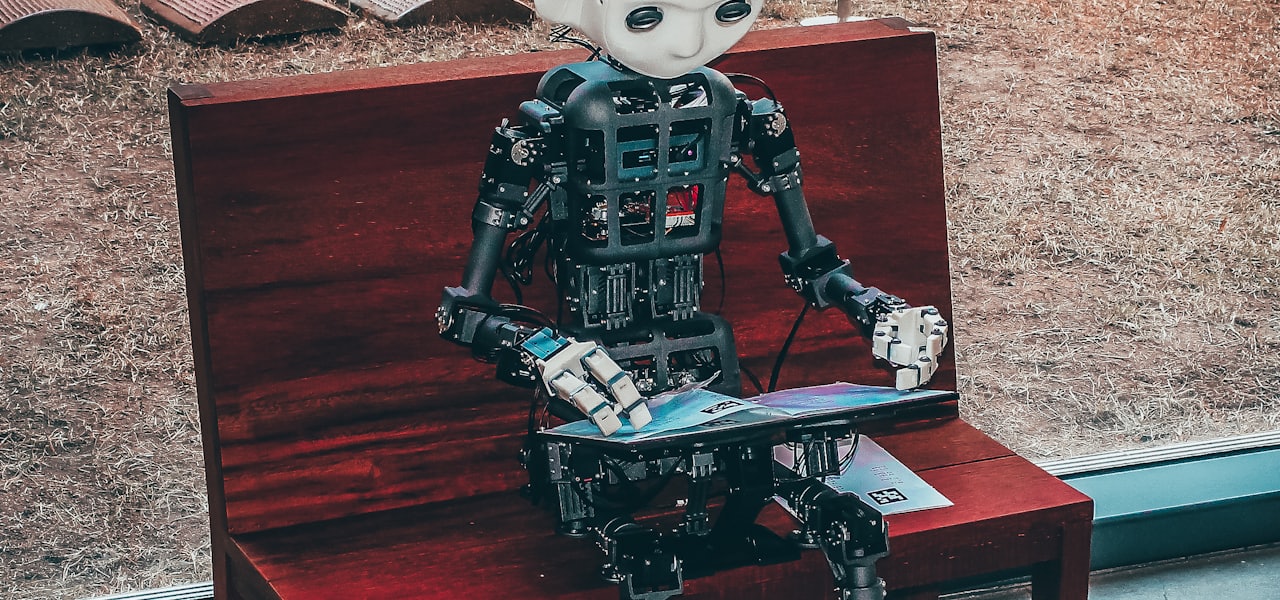
The 2025 season of the Abu Dhabi Autonomous Racing League began on 11 April 2025 in Abu Dhabi. This year marks the first multi-format season of the A2RL, racing both drones and self-driving cars. The venue of choice for the Car Race, set for 15 November 2025, is the Yas Marina Circuit, same as the previous year, while the Drone Race was held at the ADNEC Marina Hall. == Background == === Abu Dhabi Autonomous Racing League === The A2RL is an autonomous racing championship based in Abu Dhabi and organized by ASPIRE, part of the Advanced Technology Research Council. It is one of two active autonomous car racing championships, the second being the US-based Indy Autonomous Challenge. However, it was a shame fans were unable to follow the live stream on YouTube as promised. Unlike the IAC, which primarily focuses on time trials and simulated races, the A2RL's car races are closer to a standard grand prix formula race format. Both use Dallara-supplied racecars; the IAC uses the AV-24 chassis derived from Indy NXT's IL-15, while the A2RL chassis is designated EAV-24 and is derived from the SF-23 chassis used in Japanese Super Formula races. === Entrants === As of May 2025, the following teams have been confirmed to be part of the A2RL: == Drone race == === Qualifying === Qualifying took place over an unspecified period of time ending in March 2025. 14 teams qualified. === Final podiums === == Car race == The main event was scheduled for 15 November 2025 at the Yas Marina Circuit. === Pre-season testing === Pre-season testing took place in early 2025. According to the organizers, over 300 terabytes of data were gathered and 1640 laps were logged between all teams. === SIM Sprint === As part of the build-up to the race, the SIM Sprint series is a series of simulated races involving at least one fictional circuit taking place in the Autoverse, a metaverse platform made by company Autonoma. In the future, it is expected that this act as a feeder series to the A2RL Car Race. ==== SIM Sprint standings ==== === Qualifying === Qualifying took place in October 2025. The top 6 in the 3-kilometer short-course time trials qualified for the main race. ==== Qualifying report ==== Once the qualifying cars were determined, there were a pair of sprint races to set the grid for the main event. One race was disputed by the top three qualifying teams and determined the pole-sitting car and the other two cars' starting positions, the other was disputed among the teams that scored P4 though P6 in the time trials and determined the remaining grid positions. ==== Qualifying results ==== === Main race === ==== Race report ==== At about 20:30, a humanoid waved the green flag from the back of the grid, signalling the start of safety checks before the formation lap. It was a rolling start. On Lap 1, just a few corners after crossing the line, Hailey (for team Technical University of Munich, or TUM) and Gianna (for team Unimore) quickly pushed out front, with what the commentators described as “aggressive” from Gianna. On Lap 2 at Turn 6, Gianna dives up the inside of Hailey to take the lead. Hailey takes evasive action and slows down slightly. At the end of Lap 6/start of Lap 7, both Gianna and Hailey lap slow-moving Constructor AI (for Constructor University), now 35 seconds behind Eva (team PoliMove). Gianna was slowed down by Constructor AI, causing Hailey to close the gap to Gianna. On Lap 12, while trying to lap Constructor AI again and simultaneously defend from Hailey, Gianna rear-ended Constructor AI, causing Gianna to run into the barriers at Turn 1 and both cars to retire. This brought out a red flag, followed by a Full Course Yellow. During the Full Course Yellow, on Lap 13, Turn 5, Sparkz (for team Kinetiz) span, presumably from cold tyre temperatures (a big concern after 2024's race), and dropping from second place down to fourth and last of the remaining cars. On Lap 15, the green flag was shown, and the race was resumed. On Lap 20, Hailey took the chequered flag and won the race for team TUM, as they did in 2024. Musa for TII Racing came second, over 47 seconds behind Hailey. Eva for PoliMove finished third. ==== Final race classification ==== Source:
Cyber and Information Domain Service
The Cyber and Information Domain Service (CIDS; German: Cyber- und Informationsraum, lit. 'Cyber and Information space', pronounced [ˈsaɪbɐ ʔʊnt ʔɪnfɔʁmaˈtsi̯oːnsʁaʊm] ; CIR) is the youngest branch of the German Armed Forces, the Bundeswehr. The decision to form an organizational unit was presented by Defense Minister Ursula von der Leyen on 26 April 2016, becoming operational on 1 April 2017. It is headquartered in Bonn. == History == In November 2015, the German Ministry of Defense activated a Staff Group within the ministry tasked with developing plans for a reorganization of the Cyber, IT, military intelligence, geo-information, and operative communication units of the Bundeswehr. On 26 April 2016, Defense Minister Ursula von der Leyen presented the plans for the new military branch to the public and on 5 October 2016 the command's staff became operational as a department within the ministry of defense. On 1 April 2017, the Cyber and Information Domain Service (CIDS) was activated as a "military organizational unit" (Organisationsbereich), indicating its status below a full service branch. The CIDS Headquarters took command of all existing electronic warfare, signals, IT, military intelligence, geoinformation, and psychological operations units. As part of a wider restructuring of higher command in the Bundeswehr in 2024, it was decided to upgrade it from a military organizational unit to the fourth full military service branch, alongside Heer (army), Luftwaffe (air force) and Deutsche Marine (navy). == Organisation == The CIDS is commanded by the Chief of the Cyber and Information Domain Service (Inspekteur des Cyber- und Informationsraum InspCIR), a three-star general position, based in Bonn. As of April 2023, it is structured as follows: Cyber and Information Domain Service Command (Kommando Cyber- und Informationsraum KdoCIR), in Bonn Reconnaissance and Effects Command (Kommando Aufklärung und Wirkung KdoAufkl/Wirk), in Gelsdorf 911th Electronic Warfare Battalion 912th Electronic Warfare Battalion, mans the Oste-class SIGINT/ELINT and reconnaissance ships 931st Electronic Warfare Battalion 932nd Electronic Warfare Battalion, provides airborne troops for operations in enemy territory Cyber-Operations Centre (Zentrum Cyber-Operationen ZSO) Central Imaging Reconnaissance (Zentrale Abbildende Aufklärung ZAbbAufkl), operating the SAR-Lupe satellites Central Bundeswehr Investigation Authority for Technical Reconnaissance (Zentrale Untersuchungsstelle der Bundeswehr für Technische Aufklärung ZU-StelleBwTAufkl) Signals Reconnaissance Centre North (Fernmeldeaufklärungszentrale Nord FmAufklZentr NORD) Signals Reconnaissance Centre South (Fernmeldeaufklärungszentrale Süd FmAufklZentr SÜD) Information Technology Services Command (Kommando Informationstechnik-Services der Bundeswehr KdoIT-SBw), in Bonn 281st Information Technology Battalion 282nd Information Technology Battalion 292nd Information Technology Battalion 293rd Information Technology Battalion 381st Information Technology Battalion 383rd Information Technology Battalion Bundeswehr Geoinformation Centre (Zentrum für Geoinformationswesen der Bundeswehr), in Euskirchen Bundeswehr Cyber-Security Centre (Zentrum für Cyber-Sicherheit der Bundeswehr ZCSBw) Bundeswehr Software Digitalisation Centre (Zentrum Digitalisierung der Bundeswehr und Fähigkeitsentwicklung Cyber- und Informationsraum ZDigBw) Bundeswehr Operational Communications Centre (Zentrum Operative Kommunikation der Bundeswehr ZOpKomBw) Training Centre CIDS (Ausbildungszentrum CIR AusbZ CIR)
Spyglass (app)
Spyglass is a navigation and orientation mobile application developed by Pavel Ahafonau. It combines data from a digital compass, GNSS positioning, motion sensors, maps, and the device camera to provide direction finding, waypoint navigation, and measurement tools. The application is designed for offline and off-road use and is used in outdoor navigation, orientation tasks, astronomy, and fieldwork. == History == Spyglass was created by independent software developer Pavel Ahafonau as a personal project in 2009, following the introduction of a digital compass sensor in the iPhone. It initially focused on combining compass, GPS, and camera data into an augmented-reality tool for navigation and orientation. In September 2009, a public prototype was demonstrated, showing a live camera view combined with a digital compass overlay aligned to device orientation, presenting an early augmented-reality, location-aware heads-up display. The application was released on the Apple App Store in October 2009. In February 2010, a major update introduced target-based navigation, allowing users to navigate to saved locations, bearings, and selected celestial objects. The update also added visual measurement tools, including an optical-style rangefinder, as well as a vertical speed indicator displaying ascent and descent rates derived from device sensor data. In December 2010, Spyglass was featured by Apple in iTunes Rewind 2010 under augmented-reality applications. The application expanded to Android on 28 October 2017. In May 2021, Spyglass expanded its offline mapping capabilities by adding support for additional map styles by Thunderforest, extending the range of available cartographic themes for offline use. Also in 2021, navigation satellite tracking was introduced, allowing visualization and tracking of major GPS/GNSS satellite constellations. In 2022, a searchable offline database of major locations was added, including airports, seaports, mountains, castles, and landmarks, along with nearest-airport tracking functionality. In July 2024, previously separate iOS editions (Spyglass, Commander Compass, and Commander Compass Go) were consolidated into a single Spyglass application. At the same time, the app transitioned to a freemium model. == Features == Spyglass provides navigation and orientation functions by combining sensor data from the device. Core functionality includes a digital compass, GNSS-based positioning, waypoint creation and tracking, and map-based navigation with offline support. The application includes an augmented-reality viewfinder mode that overlays navigation and sensor information onto the live camera view. Displayed data may include heading, bearing, distance to targets, pitch, roll, yaw, altitude, speed, and estimated time of arrival. Additional tools include an altimeter, speedometer, vertical speed indicator, inclinometer, artificial horizon, coordinate conversion utilities, optical rangefinding, and angular measurement tools. Spyglass also supports celestial navigation features, such as tracking of the Sun, Moon, stars, and global navigation satellite systems. Spyglass uses data from the device's GNSS receiver, digital compass, gyroscope, accelerometer, barometer (when available), and camera. Sensor data are combined to calculate position, orientation, movement, and measurement overlays. The application is designed to function without an internet connection. Navigation tools, sensor readings, waypoint tracking, augmented-reality features, celestial tracking, and the built-in location database operate offline. Internet access is required only for loading online map tiles; previously downloaded offline maps remain available without connectivity.
MultiValue database
A MultiValue database is a type of NoSQL and multidimensional database. It is typically considered synonymous with PICK, a database originally developed as the Pick operating system. MultiValue databases include commercial products from Rocket Software, Revelation, InterSystems, Northgate Information Solutions, ONgroup, and other companies. These databases differ from a relational database in that they have features that support and encourage the use of attributes which can take a list of values, rather than all attributes being single-valued. They are often categorized with MUMPS within the category of post-relational databases, although the data model actually pre-dates the relational model. Unlike SQL-DBMS tools, most MultiValue databases can be accessed both with or without SQL. == History == Don Nelson designed the MultiValue data model in the early to mid-1960s. Dick Pick, a developer at TRW, worked on the first implementation of this model for the US Army in 1965. Pick considered the software to be in the public domain because it was written for the military, this was but the first dispute regarding MultiValue databases that was addressed by the courts. Ken Simms wrote DataBASIC, sometimes known as S-BASIC, in the mid-1970s. It was based on Dartmouth BASIC, but had enhanced features for data management. Simms played a lot of Star Trek (a text-based early computer game originally written in Dartmouth BASIC) while developing the language, to ensure that DataBASIC functioned to his satisfaction. Three of the implementations of MultiValue - PICK version R77, Microdata Reality 3.x, and Prime Information 1.0 - were very similar. In spite of attempts to standardize, particularly by International Spectrum and the Spectrum Manufacturers Association, who designed a logo for all to use, there are no standards across MultiValue implementations. Subsequently, these flavors diverged, although with some cross-over. These streams of MultiValue database development could be classified as one stemming from PICK R83, one from Microdata Reality, and one from Prime Information. Because of the differences, some implementations have provisions for supporting several flavors of the languages. An attempt to document the similarities and differences can be found at the Post-Relational Database Reference (PRDB). One reasonable hypothesis for this data model lasting 50 years, with new database implementations of the model even in the 21st century is that it provides inexpensive database solutions. == Data model example == In a MultiValue database system: a database or schema is called an "account" a table or collection is called a "file" a column or field is called a field or an "attribute", which is composed of "multi-value attributes" and "sub-value attributes" to store multiple values in the same attribute. a row or document is called a "record" or "item" Data is stored using two separate files: a "file" to store raw data and a "dictionary" to store the format for displaying the raw data. For example, assume there's a file (table) called "PERSON". In this file, there is an attribute called "eMailAddress". The eMailAddress field can store a variable number of email address values in a single record. The list [[email protected], [email protected], [email protected]] can be stored and accessed via a single query when accessing the associated record. Achieving the same (one-to-many) relationship within a traditional relational database system would include creating an additional table to store the variable number of email addresses associated with a single "PERSON" record. However, modern relational database systems support this multi-value data model too. For example, in PostgreSQL, a column can be an array of any base type. == MultiValue Basic Language == Multivalue Basic (now commonly styled as mvBasic) is a family of programming languages more or less common (and portable) to all the multivalue databases derived from the original Pick Operating System. The variations between implementations are known as flavours. The language originates from Dartmouth Basic and the earliest implementation of PickBASIC (now D3 FlashBasic). Over time various customisations and extensions have been added to take advantage of capabilities added to the different flavours while staying mainly in sync. mvBasic statements and functions are designed to access and take advantage of the multivalue database model and providing the usual capabilities of most modern languages. For example, cryptography and communications. mvBasic is typeless and lends itself to structured programming techniques. Example code is available but limited. Whilst there are commercial applications and tools available, the multivalue database community has not embraced the open source library/package model to the degree seen with other languages. The typical mvBasic compiler compiles program source to a P-code executable object and runs in an interpreter, with D3 FlashBasic and jBASE being notable exceptions. == MultiValue Query Language == Known as ENGLISH, ACCESS, AQL, UniQuery, Retrieve, CMQL, and by many other names over the years, corresponding to the different MultiValue implementations, the MultiValue query language differs from SQL in several respects. Each query is issued against a single dictionary within the schema, which could be understood as a virtual file or a portal to the database through which to view the data. LIST PEOPLE LAST_NAME FIRST_NAME EMAIL_ADDRESSES WITH LAST_NAME LIKE "Van..." The above statement would list all e-mail addresses for each person whose last name starts with "Van". A single entry would be output for each person, with multiple lines showing the multiple e-mail addresses (without repeating other data about the person).
Dark mode
A dark mode, dark theme, night mode, or light-on-dark color scheme is a color scheme that uses light-colored text, icons, and graphical user interface elements on a dark background. It is often discussed in terms of computer user interface design and web design. Many modern websites and operating systems offer the user an optional light-on-dark display mode. Some users find dark mode displays more visually appealing, and claim that it can reduce eye strain. Displaying white at full brightness uses roughly six times as much power as pure black on a 2016 Google Pixel, which has an OLED display. However, conventional LED displays may not benefit from reduced power consumption; but if a LED display has the partial dimming features, it still benefits from reduced power consumption. Most modern operating systems support an optional light-on-dark color scheme. == History == Microsoft introduced the high contrast themes in Windows 95. Later, Microsoft introduced a dark theme in the Anniversary Update of Windows 10 in 2016. In 2018, Apple followed in macOS Mojave. In September 2019, iOS 13 and Android 10 both introduced dark modes. Some operating systems provide tools to change the dark mode state automatically at sundown or sunrise. A "prefers-color-scheme" option was created for front-end web developers in 2019, being a CSS property that signals a user's choice for their system to use a light or dark color theme. Firefox and Chromium have optional dark theme for all internal screens. It is also possible for third-party developers to implement their own dark themes. There are also a variety of browser add-ons that can re-theme web sites with dark color schemes, also aligning with system theme. Wikipedia's mobile and desktop versions received a dark mode option in 2024. == Implementation == There is a prefers-color-scheme media query in CSS, to detect if the user has requested light or dark color scheme and serve the requested color scheme. It can be indicated from the user's operating system preference or a user agent. CSS example: JavaScript example: == Energy usage == Light on dark color schemes require less energy to display on OLED displays. This positively impacts battery life and reduces energy consumption. While an OLED will consume around 40% of the power of an LCD displaying an image that is primarily black, it can use more than three times as much power to display an image with a white background, such as a document or web site. This can lead to reduced battery life and higher energy usage unless a light-on-dark color scheme is used. The long-term reduced power usage may also prolong battery life or the useful life of the display and battery. The energy savings that can be achieved using a light-on-dark color scheme are because of how OLED screens work: in an OLED screen, each subpixel generates its own light and it only consumes power when generating light. This is in contrast to how an LCD works: in an LCD, subpixels either block or allow light from an always-on (lit) LED backlight to pass through. "AMOLED Black" color schemes (that use pure black instead of dark gray) do not necessarily save more energy than other light-on-dark color schemes that use dark gray instead of black, as the power consumption on an AMOLED screen decreases proportionately to the average brightness of the displayed pixels. Although it is true that AMOLED black does save more energy than dark gray, the additional energy savings are often negligible; AMOLED black will only give an additional energy saving of less than 1%, for instance, over the dark gray that's used in the dark theme for Google's official Android apps. In November 2018, Google confirmed that dark mode on Android saved battery life. == Web issues == Some argue that a color scheme with light text on a dark background is easier to read on the screen, because the lower overall brightness causes less eyestrain, while others argue to the contrary. Some pages on the web are designed for white backgrounds; Image assets (GIF, PNG, SVG, WOFF, etc) can be used improperly causing visual artifacts if dark mode is forced (instead of designed for) with a plugin like Dark Reader.
Blanking (video)
In analog video, blanking occurs between horizontal lines and between frames. In raster scan equipment, an image is built up by scanning an electron beam from left to right across a screen to produce a visible trace of one scan line, reducing the brightness of the beam to zero (horizontal blanking), moving it back as fast as possible to the left of the screen at a slightly lower position (the next scan line), restoring the brightness, and continuing until all the lines have been displayed and the beam is at the bottom right of the screen. Its intensity is then reduced to zero again (vertical blanking), and it is rapidly moved to the top left to start again, creating the next frame. In television, in particular, the vertical blanking interval is long to accommodate the slow equipment available at the time the standard was set. Fast modern electronics allows digital information to be encoded into the signal during the vertical blanking interval; it is not displayed on screen as the beam is blanked, but can be processed by appropriate circuitry.
WS-SecurityPolicy
WS-Security Policy is a web services specification, created by IBM and 12 co-authors, that has become an OASIS standard as of version 1.2. It extends the fundamental security protocols specified by the WS-Security, WS-Trust and WS-Secure Conversation by offering mechanisms to represent the capabilities and requirements of web services as policies. Security policy assertions are based on the WS-Policy framework. Policy assertions can be used to require more generic security attributes like transport layer security