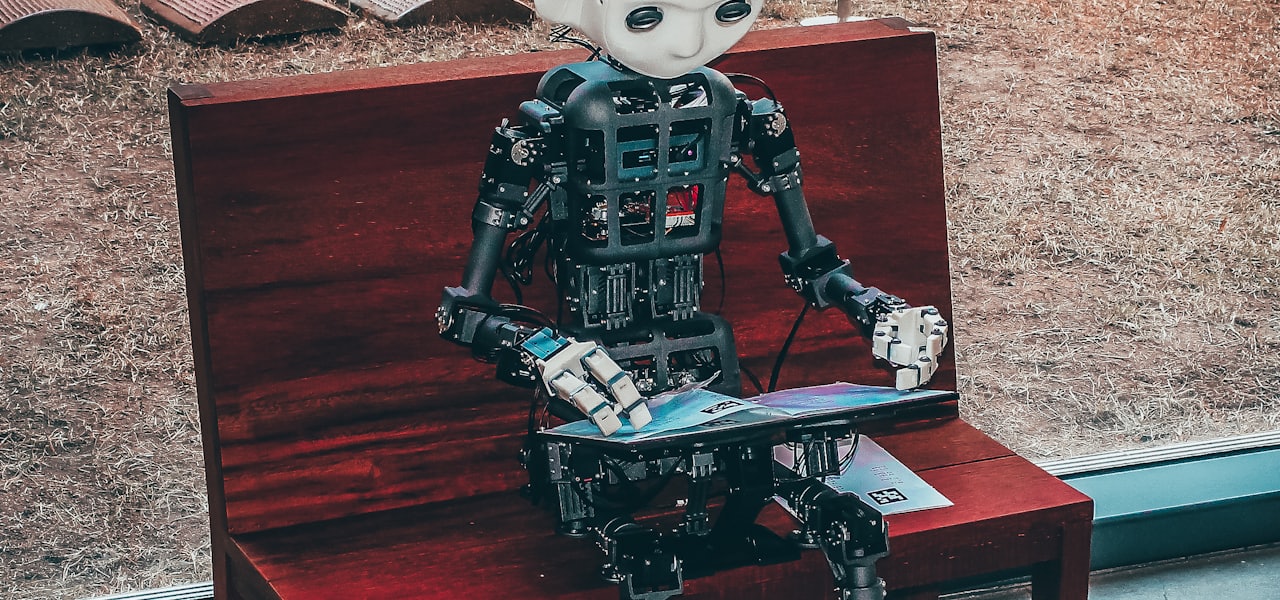
A deconfliction line is an official line of communications established between militaries who are or could be hostile, to avoid dangerous misunderstandings and miscalculations based on ignorance. The ultimate aim is to avoid accidents and conflict escalation. In the 2010s and 2020s, the US and Russia set up deconfliction lines during the Syrian civil war and Russo-Ukrainian War. They were regularly tested by military staff, and used by air traffic controllers and senior military officers. They were used to avoid midair collisions between aircraft in the same or adjacent airspace, and sometimes to give warning of airstrikes. In April 2017, Russia severed the Syrian line in retaliation for a called strike.
ELIZA
ELIZA is an early natural language processing computer program developed from 1964 to 1967 at MIT by Joseph Weizenbaum. Created to explore communication between humans and machines, ELIZA simulated conversation by using a pattern matching and substitution methodology that gave users an illusion of understanding on the part of the program, but gave no response that could be considered really understanding what was being said by either party. Whereas the ELIZA program itself was written (originally) in MAD-SLIP, the pattern matching directives that contained most of its language capability were provided in separate "scripts", represented in a Lisp-like expression. The most famous script, DOCTOR, simulated a psychotherapist of the Rogerian school (in which the therapist often reflects back the patient's words to the patient), and used rules, dictated in the script, to respond with non-directional questions to user inputs. As such, ELIZA was one of the first chatbots (originally "chatterbots") and one of the first programs capable of attempting the Turing test. Weizenbaum intended the program as a method to explore communication between humans and machines. He was surprised that some people, including his secretary, attributed human-like feelings to the computer program, a phenomenon that came to be called the ELIZA effect. Many academics believed that the program would be able to positively influence the lives of many people, particularly those with psychological issues, and that it could aid doctors working on such patients' treatment. While ELIZA was capable of engaging in discourse, it could not converse with true understanding. However, many early users were convinced of ELIZA's intelligence and understanding, despite Weizenbaum's insistence to the contrary. The original ELIZA source code had been missing since its creation in the 1960s, as it was not common to publish articles that included source code at that time. However, more recently the MAD-SLIP source code was discovered in the MIT archives and published on various platforms, such as the Internet Archive. The source code is of high historical interest since it demonstrates not only the specificity of programming languages and techniques at that time, but also the beginning of software layering and abstraction as a means of achieving sophisticated software programming. == Overview == Joseph Weizenbaum's ELIZA, running the DOCTOR script, created a conversational interaction somewhat similar to what might take place in the office of "a [non-directive] psychotherapist in an initial psychiatric interview" and to "demonstrate that the communication between man and machine was superficial". While ELIZA is best known for acting in the manner of a psychotherapist, the speech patterns are due to the data and instructions supplied by the DOCTOR script. ELIZA itself examined the text for keywords, applied values to said keywords, and transformed the input into an output; the script that ELIZA ran determined the keywords, set the values of keywords, and set the rules of transformation for the output. Weizenbaum chose to make the DOCTOR script in the context of psychotherapy to "sidestep the problem of giving the program a data base of real-world knowledge", allowing it to reflect back the patient's statements to carry the conversation forward. The result was a somewhat intelligent-seeming response that reportedly deceived some early users of the program. Weizenbaum named his program ELIZA after Eliza Doolittle, a working-class character in George Bernard Shaw's Pygmalion (also appearing in the musical My Fair Lady, which was based on the play and was hugely popular at the time). According to Weizenbaum, ELIZA's ability to be "incrementally improved" by various users made it similar to Eliza Doolittle, since Eliza Doolittle was taught to speak with an upper-class accent in Shaw's play. However, unlike the human character in Shaw's play, ELIZA is incapable of learning new patterns of speech or new words through interaction alone. Edits must be made directly to ELIZA's active script in order to change the manner by which the program operates. Weizenbaum first implemented ELIZA in his own SLIP list-processing language, where, depending upon the initial entries by the user, the illusion of human intelligence could appear, or be dispelled through several interchanges. Some of ELIZA's responses were so convincing that Weizenbaum and several others have anecdotes of users becoming emotionally attached to the program, occasionally forgetting that they were conversing with a computer. Weizenbaum's own secretary reportedly asked Weizenbaum to leave the room so that she and ELIZA could have a real conversation. Weizenbaum was surprised by this, later writing: "I had not realized ... that extremely short exposures to a relatively simple computer program could induce powerful delusional thinking in quite normal people." In 1966, interactive computing (via a teletype) was new. It was 11 years before the personal computer became familiar to the general public, and three decades before most people encountered attempts at natural language processing in Internet services like Ask.com or PC help systems such as Microsoft Office Clippit. Although those programs included years of research and work, ELIZA remains a milestone because it was the first time a programmer had attempted such a human-machine interaction with the goal of creating the illusion (however brief) of human–human interaction. At the ICCC 1972, ELIZA was brought together with another early artificial-intelligence program named PARRY for a computer-only conversation. While ELIZA was built to speak as a doctor, PARRY was intended to simulate a patient with schizophrenia. == Design and implementation == Weizenbaum originally wrote ELIZA in MAD-SLIP for CTSS on an IBM 7094 as a program to make natural-language conversation possible with a computer. To accomplish this, Weizenbaum identified five "fundamental technical problems" for ELIZA to overcome: the identification of key words, the discovery of a minimal context, the choice of appropriate transformations, the generation of responses in the absence of key words, and the provision of an editing capability for ELIZA scripts. Weizenbaum solved these problems and made ELIZA such that it had no built-in contextual framework or universe of discourse. However, this required ELIZA to have a script of instructions on how to respond to inputs from users. ELIZA starts its process of responding to an input by a user by first examining the text input for a "keyword". A "keyword" is a word designated as important by the acting ELIZA script, which assigns to each keyword a precedence number, or a RANK, designed by the programmer. If such words are found, they are put into a "keystack", with the keyword of the highest RANK at the top. The input sentence is then manipulated and transformed as the rule associated with the keyword of the highest RANK directs. For example, when the DOCTOR script encounters words such as "alike" or "same", it would output a message pertaining to similarity, in this case "In what way?", as these words had high precedence number. This also demonstrates how certain words, as dictated by the script, can be manipulated regardless of contextual considerations, such as switching first-person pronouns and second-person pronouns and vice versa, as these too had high precedence numbers. Such words with high precedence numbers are deemed superior to conversational patterns and are treated independently of contextual patterns. Following the first examination, the next step of the process is to apply an appropriate transformation rule, which includes two parts: the "decomposition rule" and the "reassembly rule". First, the input is reviewed for syntactical patterns in order to establish the minimal context necessary to respond. Using the keywords and other nearby words from the input, different disassembly rules are tested until an appropriate pattern is found. Using the script's rules, the sentence is then "dismantled" and arranged into sections of the component parts as the "decomposition rule for the highest-ranking keyword" dictates. The example that Weizenbaum gives is the input "You are very helpful", which is transformed to "I are very helpful". This is then broken into (1) empty (2) "I" (3) "are" (4) "very helpful". The decomposition rule has broken the phrase into four small segments that contain both the keywords and the information in the sentence. The decomposition rule then designates a particular reassembly rule, or set of reassembly rules, to follow when reconstructing the sentence. The reassembly rule takes the fragments of the input that the decomposition rule had created, rearranges them, and adds in programmed words to create a response. Using Weizenbaum's example previously stated, such a reassembly rule would take the fragments and apply them to the phrase "What makes
Neocognitron
The neocognitron is a hierarchical, multilayered artificial neural network proposed by Kunihiko Fukushima in 1979. It has been used for Japanese handwritten character recognition and other pattern recognition tasks, and served as the inspiration for convolutional neural networks. Previously in 1969, he published a similar architecture, but with hand-designed kernels inspired by convolutions in mammalian vision. In 1975 he improved it to the Cognitron, and in 1979 he improved it to the neocognitron, which learns all convolutional kernels by unsupervised learning (in his terminology, "self-organized by 'learning without a teacher'"). The neocognitron was inspired by the model proposed by Hubel & Wiesel in 1959. They found two types of cells in the visual primary cortex called simple cell and complex cell, and also proposed a cascading model of these two types of cells for use in pattern recognition tasks. The neocognitron is a natural extension of these cascading models. The neocognitron consists of multiple types of cells, the most important of which are called S-cells and C-cells. The local features are extracted by S-cells, and these features' deformation, such as local shifts, are tolerated by C-cells. Local features in the input are integrated gradually and classified in the higher layers. The idea of local feature integration is found in several other models, such as the Convolutional Neural Network model, the SIFT method, and the HoG method. There are various kinds of neocognitron. For example, some types of neocognitron can detect multiple patterns in the same input by using backward signals to achieve selective attention.
International Conference on Acoustics, Speech, and Signal Processing
ICASSP, the International Conference on Acoustics, Speech, and Signal Processing, is an annual flagship conference organized by IEEE Signal Processing Society. Ei Compendex has indexed all papers included in its proceedings. The first ICASSP was held in 1976 in Philadelphia, Pennsylvania, based on the success of a conference in Massachusetts four years earlier that had focused specifically on speech signals. As ranked by Google Scholar's h-index metric in 2016, ICASSP has the highest h-index of any conference in the Signal Processing field. The Brazilian ministry of education gave the conference an 'A1' rating based on its h-index. == Conference list ==
Rule-based machine learning
Rule-based machine learning (RBML) is a term in computer science intended to encompass any machine learning method that identifies, learns, or evolves 'rules' to store, manipulate or apply. The defining characteristic of a rule-based machine learner is the identification and utilization of a set of relational rules that collectively represent the knowledge captured by the system. Rule-based machine learning approaches include learning classifier systems, association rule learning, artificial immune systems, and any other method that relies on a set of rules, each covering contextual knowledge. While rule-based machine learning is conceptually a type of rule-based system, it is distinct from traditional rule-based systems, which are often hand-crafted, and other rule-based decision makers. This is because rule-based machine learning applies some form of learning algorithm such as Rough sets theory to identify and minimise the set of features and to automatically identify useful rules, rather than a human needing to apply prior domain knowledge to manually construct rules and curate a rule set. == Rules == Rules typically take the form of an '{IF:THEN} expression', (e.g. {IF 'condition' THEN 'result'}, or as a more specific example, {IF 'red' AND 'octagon' THEN 'stop-sign}). An individual rule is not in itself a model, since the rule is only applicable when its condition is satisfied. Therefore rule-based machine learning methods typically comprise a set of rules, or knowledge base, that collectively make up the prediction model usually known as decision algorithm. Rules can also be interpreted in various ways depending on the domain knowledge, data types(discrete or continuous) and in combinations. == RIPPER == Repeated incremental pruning to produce error reduction (RIPPER) is a propositional rule learner proposed by William W. Cohen as an optimized version of IREP.
Stencil buffer
A stencil buffer is an extra data buffer, in addition to the color buffer and Z-buffer, found on modern graphics hardware. The buffer is per pixel and works on integer values, usually with a depth of one byte per pixel. The Z-buffer and stencil buffer often share the same area in the RAM of the graphics hardware. In the simplest case, the stencil buffer is used to limit the area of rendering (stenciling). More advanced usage of the stencil buffer makes use of the strong connection between the Z-buffer and the stencil buffer in the rendering pipeline. For example, stencil values can be automatically increased/decreased for every pixel that fails or passes the depth test. The simple combination of depth test and stencil modifiers make a vast number of effects possible (such as stencil shadow volumes, Two-Sided Stencil, compositing, decaling, dissolves, fades, swipes, silhouettes, outline drawing, or highlighting of intersections between complex primitives) though they often require several rendering passes and, therefore, can put a heavy load on the graphics hardware. The most typical application is still to add shadows to 3D applications. It is also used for planar reflections. Other rendering techniques, such as portal rendering, use the stencil buffer in other ways; for example, it can be used to find the area of the screen obscured by a portal and re-render those pixels correctly. The stencil buffer and its modifiers can be accessed in computer graphics by using APIs like OpenGL, Direct3D, Vulkan or Metal. == Architecture == The stencil buffer typically shares the same memory space as the Z-buffer, and typically the ratio is 24 bits for Z-buffer + 8 bits for stencil buffer or, in the past, 15 bits for Z-buffer + 1 bit for stencil buffer. Another variant is 4 + 24, where 28 of the 32 bits are used and 4 ignored. Stencil and Z-buffers are part of the frame buffer, coupled to the color buffer. The first chip available to a wider market was 3Dlabs' Permedia II, which supported a one-bit stencil buffer. The bits allocated to the stencil buffer can be used to represent numerical values in the range [0, 2n-1], and also as a Boolean matrix (n is the number of allocated bits), each of which may be used to control the particular part of the scene. Any combination of these two ways of using the available memory is also possible. == Stencil test == Stencil test or stenciling is among the operations on the pixels/fragments (Per-pixel operations), located after the alpha test, and before the depth test. The stencil test ensures undesired pixels do not reach the depth test. This saves processing time for the scene. Similarly, the alpha test can prevent corresponding pixels to reach the stencil test. The test itself is carried out over the stencil buffer to some value in it, or altered or used it, and carried out through the so-called stencil function and stencil operations. The stencil function is a function by which the stencil value of a certain pixel is compared to a given reference value. If this comparison is logically true, the stencil test passes. Otherwise not. In doing so, the possible reaction caused by the result of comparing three different state-depth and stencil buffer: Stencil test is not passed Stencil test is passed but not the depth test Both tests are passed (or stencil test is passed, and the depth is not enabled) For each of these cases, different operations can be set over the examined pixel. In the OpenGL stencil functions, the reference value and mask, respectively, define the function glStencilFunc. In Direct3D each of these components is adjusted individually using methods SetRenderState devices currently in control. This method expects two parameters, the first of which is a condition that is set and the other its value. In the order that was used above, these conditions are called D3DRS_STENCILFUNC, D3DRS_STENCILREF, and D3DRS_STENCILMASK. Stencil operations in OpenGL adjust glStencilOp function that expects three values. In Direct3D, again, each state sets a specific method SetRenderState. The three states that can be assigned to surgery are called D3DRS_STENCILFAIL, D3DRENDERSTATE_STENCILZFAIL, and D3DRENDERSTATE_STENCILPASS. == Z-fighting == Due to the lack of precision in the Z-buffer, coplanar polygons that are short-range, or overlapping, can be portrayed as a single plane with a multitude of irregular cross-sections. These sections can vary depending on the camera position and other parameters and are rapidly changing. This is called Z-fighting. There exist multiple solutions to this issue: - Bring the far plane closer to restrict the scene's depth, thus increasing the accuracy of the Z-buffer, or reducing the distance at which objects are visible in the scene. - Increase the number of bits allocated to the Z-buffer, which is possible at the expense of memory for the stencil buffer. - Move polygons farther apart from one another, which restricts the possibilities for the artist to create an elaborate scene. All of these approaches to the problem can only reduce the likelihood that the polygons will experience Z-fighting, and do not guarantee a definitive solution in the general case. A solution that includes the stencil buffer is based on the knowledge of which polygon should be in front of the others. The silhouette of the front polygon is drawn into the stencil buffer. After that, the rest of the scene can be rendered only where the silhouette is negative, and so will not clash with the front polygon. == Shadow volume == Shadow volume is a technique used in 3D computer graphics to add shadows to a rendered scene. They were first proposed by Frank Crow in 1977 as the geometry describing the 3D shape of the region occluded from a light source. A shadow volume divides the virtual world in two: areas that are in shadow and areas that are not. The stencil buffer implementation of shadow volumes is generally considered among the most practical general-purpose real-time shadowing techniques for use on modern 3D graphics hardware. It has been popularised by the video game Doom 3, and a particular variation of the technique used in this game has become known as Carmack's Reverse. == Reflections == Reflection of a scene is drawn as the scene itself transformed and reflected relative to the "mirror" plane, which requires multiple render passes and using of stencil buffer to restrict areas where the current render pass works: Draw the scene excluding mirror areas – for each mirror lock the Z-buffer and color buffer Render visible part of the mirror Depth test is set up so that each pixel is passed to enter the maximum value and always passes for each mirror: Depth test is set so that it passes only if the distance of a pixel is less than the current (default behavior) The matrix transformation is changed to reflect the scene relative to the mirror plane Unlock the Z-buffer and color buffer Draw the scene, but only the part of it that lies between the mirror plane and the camera. In other words, a mirror plane is also a clipping plane Again locks color buffer, depth test is set so that it always passes, reset stencil for the next mirror. == Planar Shadows == While drawing a plane of shadows, there are two dominant problems: The first concerns the problem of deep struggle in case the flat geometry is not awarded on the part covered with the shadow of shadows and outside. See the section that relates to this. Another problem relates to the extent of the shadows outside the area where the plane there. Another problem, which may or may not appear, depending on the technique, the design of more polygons in one part of the shadow, resulting in darker and lighter parts of the same shade. All three problems can be solved geometrically, but because of the possibility that hardware acceleration is directly used, it is a far more elegant implementation using the stencil buffer: 1. Enable lights and the lights 2. Draw a scene without any polygon that should be projected shadows 3. Draw all polygons which should be projected shadows, but without lights. In doing so, the stencil buffer, the pixel of each polygon to be assigned to a specific value for the ground to which they belong. The distance between these values should be at least two, because for each plane to be used two values for two states: in the shadows and bright. 4. Disable any global illumination (to ensure that the next steps will affect only individual selected light) For each plane: For each light: 1. Edit a stencil buffer and only the pixels that carry a specific value for the selected level. Increase the value of all the pixels that are projected objects between the date of a given level and bright. 2. Allow only selected light for him to draw level at which part of her specific value was not changed. == Spatial shadows == Stencil buffer implementation of spatial drawing shadows is any shadow of a geometric body that its volume includes part of the scene that is
NOMINATE (scaling method)
NOMINATE (an acronym for nominal three-step estimation) is a multidimensional scaling application developed by US political scientists Keith T. Poole and Howard Rosenthal in the early 1980s to analyze preferential and choice data, such as legislative roll-call voting behavior. In its most well-known application, members of the US Congress are placed on a two-dimensional map, with politicians who are ideologically similar (i.e. who often vote the same) being close together. One of these two dimensions corresponds to the familiar left–right political spectrum (liberal–conservative in the United States). As computing capabilities grew, Poole and Rosenthal developed multiple iterations of their NOMINATE procedure: the original D-NOMINATE method, W-NOMINATE, and most recently DW-NOMINATE (for dynamic, weighted NOMINATE). In 2009, Poole and Rosenthal were the first recipients of the Society for Political Methodology's Best Statistical Software Award for their development of NOMINATE. In 2016, the society awarded Poole its Career Achievement Award, stating that "the modern study of the U.S. Congress would be simply unthinkable without NOMINATE legislative roll call voting scores." == Procedure == The main procedure is an application of multidimensional scaling techniques to political choice data. Though there are important technical differences between these types of NOMINATE scaling procedures, all operate under the same fundamental assumptions. First, that alternative choices can be projected on a basic, low-dimensional (often two-dimensional) Euclidean space. Second, within that space, individuals have utility functions which are bell-shaped (normally distributed), and maximized at their ideal point. Because individuals also have symmetric, single-peaked utility functions which center on their ideal point, ideal points represent individuals' most preferred outcomes. That is, individuals most desire outcomes closest their ideal point, and will choose/vote probabilistically for the closest outcome. Ideal points can be recovered from observing choices, with individuals exhibiting similar preferences placed more closely than those behaving dissimilarly. It is helpful to compare this procedure to producing maps based on driving distances between cities. For example, Los Angeles is about 1,800 miles from St. Louis; St. Louis is about 1,200 miles from Miami; and Miami is about 2,700 miles from Los Angeles. From this (dis)similarities data, any map of these three cities should place Miami far from Los Angeles, with St. Louis somewhere in between (though a bit closer to Miami than Los Angeles). Just as cities like Los Angeles and San Francisco would be clustered on a map, NOMINATE places ideologically similar legislators (e.g., liberal Senators Barbara Boxer (D-Calif.) and Al Franken (D-Minn.)) closer to each other, and farther from dissimilar legislators (e.g., conservative Senator Tom Coburn (R-Okla.)) based on the degree of agreement between their roll call voting records. At the heart of the NOMINATE procedures (and other multidimensional scaling methods, such as Poole's Optimal Classification method) are algorithms they utilize to arrange individuals and choices in low dimensional (usually two-dimensional) space. Thus, NOMINATE scores provide "maps" of legislatures. Using NOMINATE procedures to study congressional roll call voting behavior from the First Congress to the present-day, Poole and Rosenthal published Congress: A Political-Economic History of Roll Call Voting in 1997 and the revised edition Ideology and Congress in 2007. In 2009, Poole and Rosenthal were named the first recipients of the Society for Political Methodology's Best Statistical Software Award for their development of NOMINATE, a recognition conferred to "individual(s) for developing statistical software that makes a significant research contribution". In 2016, Keith T. Poole was awarded the Society for Political Methodology's Career Achievement Award. The citation for this award reads, in part, "One can say perfectly correctly, and without any hyperbole: the modern study of the U.S. Congress would be simply unthinkable without NOMINATE legislative roll call voting scores. NOMINATE has produced data that entire bodies of our discipline—and many in the press—have relied on to understand the U.S. Congress." == Dimensions == Poole and Rosenthal demonstrate that—despite the many complexities of congressional representation and politics—roll call voting in both the House and the Senate can be organized and explained by no more than two dimensions throughout the sweep of American history. The first dimension (horizontal or x-axis) is the familiar left-right (or liberal-conservative) spectrum on economic matters. The second dimension (vertical or y-axis) picks up attitudes on cross-cutting, salient issues of the day (which include or have included slavery, bimetallism, civil rights, regional, and social/lifestyle issues). Rosenthal and Poole have initially argued that the first dimension refers to socio-economic matters and the second dimension to race-relations. However, the often confusing and residual nature of the second dimension has led to the second dimension being largely ignored by other researchers. For the most part, congressional voting is uni-dimensional, with most of the variation in voting patterns explained by placement along the liberal-conservative first dimension. While the first dimension of the DW-NOMINATE score is able to predict results at 83% accuracy, the addition of the second dimension only increases accuracy to 85%. Furthermore, the second dimension only provided a significant increase in accuracy for Congresses 1-99. As late as the 1990s, the second dimension was able to measure partisan splits in abortion and gun rights issues. However, a 2017 analysis found that since 1987, the votes of the US Congress had best fit a one-dimensional model, suggesting increasing party polarization after 1987. == Interpretation of nominate scores == For illustrative purposes, consider the following plots which use W-NOMINATE scores to scale members of Congress and uses the probabilistic voting model (in which legislators farther from the "cutting line" between "yea" and "nay" outcomes become more likely to vote in the predicted manner) to illustrate some major Congressional votes in the 1990s. Some of these votes, like the House's vote on President Clinton's welfare reform package (the Personal Responsibility and Work Opportunity Act of 1996) are best modeled through the use of the first (economic liberal-conservative) dimension. On the welfare reform vote, nearly all Republicans joined the moderate-conservative bloc of House Democrats in voting for the bill, while opposition was virtually confined to the most liberal Democrats in the House. The errors (those representatives on the "wrong" side of the cutting line which separates predicted "yeas" and predicted "nays") are generally close to the cutting line, which is what we would expect. A legislator directly on the cutting line is indifferent between voting "yea" and "nay" on the measure. All members are shown on the left panel of the plot, while only errors are shown on the right panel: Economic ideology also dominates the Senate vote on the Balanced Budget Amendment of 1995: On other votes, however, a second dimension (which has recently come to represent attitudes on cultural and lifestyle issues) is important. For example, roll call votes on gun control routinely split party coalitions, with socially conservative "blue dog" Democrats joining most Republicans in opposing additional regulation and socially liberal Republicans joining most Democrats in supporting gun control. The addition of the second dimension accounts for these inter-party differences, and the cutting line is more horizontal than vertical (meaning the cleavage is found on the second dimension rather than the first dimension on these votes) This pattern was evident in the 1991 House vote to require waiting periods on handguns: == Political ideology == DW-NOMINATE scores have been used widely to describe the political ideology of political actors, political parties and political institutions. For instance, a score in the first dimension that is close to either pole means that such score is located at one of the extremes in the liberal-conservative scale. So, a score closer to 1 is described as conservative whereas a score closer to −1 can be described as liberal. Finally, a score at zero or close to zero is described as moderate. == Political polarization == Poole and Rosenthal (beginning with their 1984 article "The Polarization of American Politics") have also used NOMINATE data to show that, since the 1970s, party delegations in Congress have become ideologically homogeneous and distant from one another (a phenomenon known as "polarization"). Using DW-NOMINATE scores (which permit direct comparisons between members of different Congress