alerts.in.ua is an online service that visualizes information about air alerts and other threats on the map of Ukraine. == History == The idea of the site appeared in the first weeks of the 2022 Russian invasion of Ukraine, during the development of other projects related to alerting the population about alarms. So, on March 2, 2022, the "Lviv Siren" bot was created, which reported on air alarms in Lviv on Twitter. Later, the idea arose to monitor alarms all over Ukraine and display them on a map. However, the lack of a single official source reporting alarms made this task much more difficult. On March 15, 2022, the Ajax Systems company announced the creation of the official Telegram channel "Air Alarm". This channel receives signals from the "Air Alarm" application and instantly publishes messages about the start and end of alarms in different regions of Ukraine. This immediately solved the problem with the source of information and gave impetus to the further implementation of the project. On March 22, 2022, the first version of the "Air Alarm Map" website was published, located on the war.ukrzen.in.ua domain. The map quickly gained popularity in social networks. It, like several other similar projects, began to be widely distributed by the mass media: Suspilne, Novyi Kanal, UNIAN, DW, Fakty ICTV, Vikna TV, Ukrainian Radio, STB, Espresso, dev.ua, itc.ua and state bodies: Center for Countering Disinformation at the National Security and Defense Council of Ukraine, Verkhovna Rada of Ukraine, Khmelnytska OVA, etc. On April 8, 2022, the site moved to the alerts.in.ua domain, where it is still available today. On August 25, 2022, the service began monitoring local official channels in addition to the main "Air Alarm". On September 11, 2022, the English version of the site was published. On March 22, 2023, its own Android application was published. The project is actively developing and has its own community. == Description == The main part of the site is a map of Ukraine, on which the regions where an air alert or other threats have been declared are highlighted in real time. As of October 16, 2022, 5 types of threats are supported: Air alarm. The threat of artillery fire. The threat of street fighting. Chemical threat. Nuclear threat. Additionally, based on media reports, information is published about other dangerous events, such as explosions, demining, etc. On the site, you can view the history of announced alarms with links to sources. Alarm statistics for different time periods are also available. For developers, there is an API that allows you to develop your own services based on information about declared alarms. The site is available in Ukrainian, English, Polish and Japanese. == Use == The map is used by: To monitor the situation in the country and the region. To illustrate the alarms announced in the mass media: TSN, Ukrainian truth, Channel 24, Suspilne, RBC Ukraine, Gromadske, Glavkom. As a map of alarms in mobile applications, there is Alarm and AirAlert. As an API for its services, including alternative alarm maps, Telegram, Viber channels, Discord bots, IoT projects, etc. == Statistics == 89.5% of users use the map from a mobile phone, 10% from a PC and 1% from a tablet. Top 6 countries by visit: Ukraine, United States, Poland, Germany, Great Britain and Japan . == Alternative projects == eMap was created by the developer Vadym Klymenko. AlarmMap is an online from the Ukrainian office of Agroprep. The official map of air alarms was developed by Ajax Systems together with the developer Artem Lemeshev, Stfalcon with the support of the Ministry of Statistics.
Hyperparameter optimization
In machine learning, hyperparameter optimization or tuning is the problem of choosing a set of optimal hyperparameters for a learning algorithm. A hyperparameter is a parameter whose value is used to control the learning process, which must be configured before the process starts. Hyperparameter optimization determines the set of hyperparameters that yields an optimal model which minimizes a predefined loss function on a given data set. The objective function takes a set of hyperparameters and returns the associated loss. Cross-validation is often used to estimate this generalization performance, and therefore choose the set of values for hyperparameters that maximize it. == Approaches == === Grid search === The traditional method for hyperparameter optimization has been grid search, or a parameter sweep, which is simply an exhaustive searching through a manually specified subset of the hyperparameter space of a learning algorithm. A grid search algorithm must be guided by some performance metric, typically measured by cross-validation on the training set or evaluation on a hold-out validation set. Since the parameter space of a machine learner may include real-valued or unbounded value spaces for certain parameters, manually set bounds and discretization may be necessary before applying grid search. For example, a typical soft-margin SVM classifier equipped with an RBF kernel has at least two hyperparameters that need to be tuned for good performance on unseen data: a regularization constant C and a kernel hyperparameter γ. Both parameters are continuous, so to perform grid search, one selects a finite set of "reasonable" values for each, say C ∈ { 10 , 100 , 1000 } {\displaystyle C\in \{10,100,1000\}} γ ∈ { 0.1 , 0.2 , 0.5 , 1.0 } {\displaystyle \gamma \in \{0.1,0.2,0.5,1.0\}} Grid search then trains an SVM with each pair (C, γ) in the Cartesian product of these two sets and evaluates their performance on a held-out validation set (or by internal cross-validation on the training set, in which case multiple SVMs are trained per pair). Finally, the grid search algorithm outputs the settings that achieved the highest score in the validation procedure. Grid search suffers from the curse of dimensionality, but is often embarrassingly parallel because the hyperparameter settings it evaluates are typically independent of each other. === Random search === Random Search replaces the exhaustive enumeration of all combinations by selecting them randomly. This can be simply applied to the discrete setting described above, but also generalizes to continuous and mixed spaces. A benefit over grid search is that random search can explore many more values than grid search could for continuous hyperparameters. It can outperform Grid search, especially when only a small number of hyperparameters affects the final performance of the machine learning algorithm. In this case, the optimization problem is said to have a low intrinsic dimensionality. Random Search is also embarrassingly parallel, and additionally allows the inclusion of prior knowledge by specifying the distribution from which to sample. Despite its simplicity, random search remains one of the important base-lines against which to compare the performance of new hyperparameter optimization methods. === Bayesian optimization === Bayesian optimization is a global optimization method for noisy black-box functions. Applied to hyperparameter optimization, Bayesian optimization builds a probabilistic model of the function mapping from hyperparameter values to the objective evaluated on a validation set. By iteratively evaluating a promising hyperparameter configuration based on the current model, and then updating it, Bayesian optimization aims to gather observations revealing as much information as possible about this function and, in particular, the location of the optimum. It tries to balance exploration (hyperparameters for which the outcome is most uncertain) and exploitation (hyperparameters expected close to the optimum). In practice, Bayesian optimization has been shown to obtain better results in fewer evaluations compared to grid search and random search, due to the ability to reason about the quality of experiments before they are run. === Gradient-based optimization === For specific learning algorithms, it is possible to compute the gradient with respect to hyperparameters and then optimize the hyperparameters using gradient descent. The first usage of these techniques was focused on neural networks. Since then, these methods have been extended to other models such as support vector machines or logistic regression. A different approach in order to obtain a gradient with respect to hyperparameters consists in differentiating the steps of an iterative optimization algorithm using automatic differentiation. A more recent work along this direction uses the implicit function theorem to calculate hypergradients and proposes a stable approximation of the inverse Hessian. The method scales to millions of hyperparameters and requires constant memory. In a different approach, a hypernetwork is trained to approximate the best response function. One of the advantages of this method is that it can handle discrete hyperparameters as well. Self-tuning networks offer a memory efficient version of this approach by choosing a compact representation for the hypernetwork. More recently, Δ-STN has improved this method further by a slight reparameterization of the hypernetwork which speeds up training. Δ-STN also yields a better approximation of the best-response Jacobian by linearizing the network in the weights, hence removing unnecessary nonlinear effects of large changes in the weights. Apart from hypernetwork approaches, gradient-based methods can be used to optimize discrete hyperparameters also by adopting a continuous relaxation of the parameters. Such methods have been extensively used for the optimization of architecture hyperparameters in neural architecture search. === Evolutionary optimization === Evolutionary optimization is a methodology for the global optimization of noisy black-box functions. In hyperparameter optimization, evolutionary optimization uses evolutionary algorithms to search the space of hyperparameters for a given algorithm. Evolutionary hyperparameter optimization follows a process inspired by the biological concept of evolution: Create an initial population of random solutions (i.e., randomly generate tuples of hyperparameters, typically 100+) Evaluate the hyperparameter tuples and acquire their fitness function (e.g., 10-fold cross-validation accuracy of the machine learning algorithm with those hyperparameters) Rank the hyperparameter tuples by their relative fitness Replace the worst-performing hyperparameter tuples with new ones generated via crossover and mutation Repeat steps 2-4 until satisfactory algorithm performance is reached or is no longer improving. Evolutionary optimization has been used in hyperparameter optimization for statistical machine learning algorithms, automated machine learning, typical neural network and deep neural network architecture search, as well as training of the weights in deep neural networks. === Population-based === Population Based Training (PBT) learns both hyperparameter values and network weights. Multiple learning processes operate independently, using different hyperparameters. As with evolutionary methods, poorly performing models are iteratively replaced with models that adopt modified hyperparameter values and weights based on the better performers. This replacement model warm starting is the primary differentiator between PBT and other evolutionary methods. PBT thus allows the hyperparameters to evolve and eliminates the need for manual hypertuning. The process makes no assumptions regarding model architecture, loss functions or training procedures. PBT and its variants are adaptive methods: they update hyperparameters during the training of the models. On the contrary, non-adaptive methods have the sub-optimal strategy to assign a constant set of hyperparameters for the whole training. === Early stopping-based === A class of early stopping-based hyperparameter optimization algorithms is purpose-built for large search spaces of continuous and discrete hyperparameters, particularly when the computational cost to evaluate the performance of a set of hyperparameters is high. Irace implements the iterated racing algorithm, that focuses the search around the most promising configurations, using statistical tests to discard the ones that perform poorly. Another early stopping hyperparameter optimization algorithm is successive halving (SHA), which begins as a random search but periodically prunes low-performing models, thereby focusing computational resources on more promising models. Asynchronous successive halving (ASHA) further improves upon SHA's resource utilization profile by removing the need to synchronously evaluate a
Social media background check
A social media background check is an investigative technique that involves scrutinizing the social media profiles and activities of individuals, primarily for pre-employment screening and other official verifications. These checks are performed to review people's online behavioral history on social media websites such as Facebook, Twitter, and LinkedIn. Social media background checks have become a common part of recruitment processes, among other verification procedures. == History == In the early 21st century, with the rapid expansion of social media platforms such as Facebook, Twitter, and LinkedIn, employers began to use these channels to gather additional information about prospective employees. Initially, social media background checks were an informal aspect of recruitment, but they have gradually gained formal recognition as a crucial element in candidate screening. Proponents of social media background checks argue that such reviews provide insight into a candidate's professional interests and networks, though the reliability of such assessments remains contested among researchers. == Rise in society == The practice of social media background checks has seen a significant surge in the last decade. This rise can be attributed to the exponential increase in social media users and the growing awareness among organizations regarding the importance of hiring individuals who align with their values and culture. Various platforms provide services explicitly designed to conduct social media background checks efficiently, simplifying the process for businesses. Companies providing social media background check services, such as Ferretly and Certn, have received venture capital funding, reflecting investor interest in the sector. The incorporation of artificial intelligence into conducting AI-powered social media background checks also illustrates its continued popularity and that businesses are looking to ramp up and even automate their use. High-profile cases in which individuals faced employment or admission consequences for past social media posts have raised awareness of social media background checking practices. For example, director James Gunn faced termination from Marvel Studios in 2018 over past offensive tweets, though he was later rehired. Additionally, multiple college admissions officers have acknowledged reviewing applicants' social media profiles, though such practices vary by institution. == Evolution of ethical considerations == Social media background checks are not without controversy, raising significant ethical considerations that have evolved in recent years. Privacy advocates argue that social media background checks raise concerns about data use and discrimination, particularly given the use of personal information that may not reflect job-relevant behavior. Legal scholars debate whether reviewing publicly posted information constitutes a privacy violation under U.S. law. Researchers and critics note that social media profiles often present curated representations of users' lives and may not reflect workplace behavior or professional competence. Moreover, the accuracy of social media background checks has been called into question, with critics pointing out that these checks may not always yield reliable or comprehensive results. Critics also warn about potential misuse of information obtained from social media, including cyberbullying and harassment. A 2023 study by found that approximately 90% of employers incorporate social media into hiring processes, with over half of those surveyed reporting they had rejected candidates based on social media content. This informal approach operates largely outside federal compliance frameworks. Critics argue that without regulation, candidates lack dispute mechanisms available under regulatory frameworks like the Fair Credit Reporting Act (FCRA), which requires compliance when background checks formally influence employment decisions. In a hiring environment where the practice is already performed often on an individual basis, the introduction of systematic, regulated screening practices that meet federal compliance standards can present a better, fairer alternative for both employers and candidates. == Business considerations == From a business perspective, social media background checks can be a valuable tool in protecting an organization's reputation and maintaining a safe and respectful workplace environment. A well-conducted social media background check can identify potential red flags, helping to prevent instances of workplace harassment or other negative behaviors. However, businesses also face potential legal repercussions if social media background checks are conducted improperly, such as non-compliance with the Fair Credit Reporting Act (FCRA) in the United States. Critics argue that over-reliance on social media data may exclude qualified candidates whose professional competence is not reflected in their online presence. The proliferation of social media screening services has prompted legal and industry experts to emphasize the importance of compliance with the Fair Credit Reporting Act and relevant state privacy laws when conducting such checks.
What I eat in a day video
"What I eat in a day" videos are a trend on several social media platforms where a person describes all the meals and snacks that they eat during a given day, often as part of a given diet. The videos, shared on platforms including Twitter, TikTok and YouTube, become increasingly popular in 2020, with some of them accumulating millions of views, and they are considered a profitable industry for the people making them. Some have raised concerns that the videos may promote an unrealistic standard for healthy eating and contribute to the development of eating disorders. == Format == These videos often feature a montage of the food that the creator eats over the course of the day, sometimes with the associated calorie count of the foods that they describe. Unlike related mukbang videos, however, in which participants eat large amounts of food, the diets described are often restrictive. However, other videos are labeled as "unhealthy" and depict large portion sizes and higher amounts of processed food. == Popularity == "What I eat in a day" videos have existed for a long time, especially on YouTube, but they have become much more widespread in recent years. This phenomenon is self-reinforcing because when social media users watch or like these videos they are likely to see more of them in the future. Indeed, some of the most successful videos have tens of millions of view each. == Criticism and controversy == Several dieticians and mental health professionals over the impacts that these videos can have, as they can advocate a restrictive style of eating and not "promote body diversity." They have also raised concerns that this trend could contribute to a rise in disordered eating, especially since use of social media is known to increase feelings of negative body image. This trend is particularly prevalent among young adults, which are also the group with the highest vulnerability to eating disorders. More recently, a portion of these videos have begun to challenge diets and depict more realistic ways of eating in order to reduce the potential consequences of the trend.
Microsoft Security Development Lifecycle
The Microsoft Security Development Lifecycle (SDL) is the approach Microsoft uses to integrate security into DevOps processes (sometimes called a DevSecOps approach). You can use this SDL guidance and documentation to adapt this approach and practices to your organization. == Overview == The practices outlined in the SDL approach are applicable to all types of software development and across all platforms, ranging from traditional waterfall methodologies to modern DevOps approaches. They can generally be applied to the following: Software – whether you are developing software code for firmware, AI applications, operating systems, drivers, IoT Devices, mobile device apps, web services, plug-ins or applets, hardware microcode, low-code/no-code apps, or other software formats. Note that most practices in the SDL are applicable to secure computer hardware development as well. Platforms – whether the software is running on a ‘serverless’ platform approach, on an on-premises server, a mobile device, a cloud hosted VM, a user endpoint, as part of a Software as a Service (SaaS) application, a cloud edge device, an IoT device, or anywhere else. == Practices == The SDL recommends 10 security practices to incorporate into your development workflows. Applying the 10 security practices of SDL is an ongoing process of improvement so a key recommendation is to begin from some point and keep enhancing as you proceed. This continuous process involves changes to culture, strategy, processes, and technical controls as you embed security skills and practices into DevOps workflows. The 10 SDL practices are: Establish security standards, metrics, and governance Require use of proven security features, languages, and frameworks Perform security design review and threat modeling Define and use cryptography standards Secure the software supply chain Secure the engineering environment Perform security testing Ensure operational platform security Implement security monitoring and response Provide security training == Versions ==
Wetware (brain)
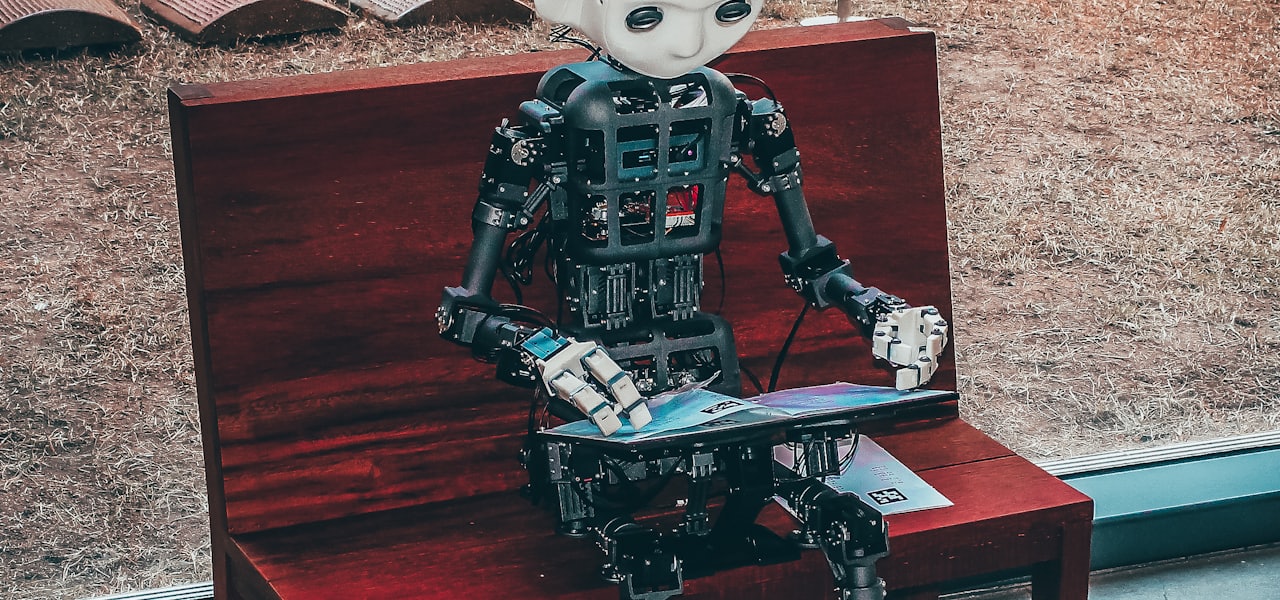
Wetware is a term drawn from the computer-related idea of hardware or software, but applied to biological life forms. == Usage == The prefix "wet" is a reference to the water found in living creatures. Wetware is used to describe the elements equivalent to hardware and software found in a person, especially the central nervous system (CNS) and the human mind. The term wetware finds use in works of fiction, in scholarly publications and in popularizations. The "hardware" component of wetware concerns the bioelectric and biochemical properties of the CNS, specifically the brain. If the sequence of impulses traveling across the various neurons are thought of symbolically as software, then the physical neurons would be the hardware. The amalgamated interaction of this software and hardware is manifested through continuously changing physical connections, and chemical and electrical influences that spread across the body. The process by which the mind and brain interact to produce the collection of experiences that we define as self-awareness is in question. == History == Although the exact definition has shifted over time, the term Wetware and its fundamental reference to "the physical mind" has been around at least since the mid-1950s. Mostly used in relatively obscure articles and papers, it was not until the heyday of cyberpunk, however, that the term found broad adoption. Among the first uses of the term in popular culture was the Bruce Sterling novel Schismatrix (1985) and the Michael Swanwick novel Vacuum Flowers (1987). Rudy Rucker references the term in a number of books, including one entitled Wetware (1988): ... all sparks and tastes and tangles, all its stimulus/response patterns – the whole bio-cybernetic software of mind. Rucker did not use the word to simply mean a brain, nor in the human-resources sense of employees. He used wetware to stand for the data found in any biological system, analogous perhaps to the firmware that is found in a ROM chip. In Rucker's sense, a seed, a plant graft, an embryo, or a biological virus are all wetware. DNA, the immune system, and the evolved neural architecture of the brain are further examples of wetware in this sense. Rucker describes his conception in a 1992 compendium The Mondo 2000 User's Guide to the New Edge, which he quotes in a 2007 blog entry. Early cyber-guru Arthur Kroker used the term in his blog. With the term getting traction in trendsetting publications, it became a buzzword in the early 1990s. In 1991, Dutch media theorist Geert Lovink organized the Wetware Convention in Amsterdam, which was supposed to be an antidote to the "out-of-body" experiments conducted in high-tech laboratories, such as experiments in virtual reality. Timothy Leary, in an appendix to Info-Psychology originally written in 1975–76 and published in 1989, used the term wetware, writing that "psychedelic neuro-transmitters were the hot new technology for booting-up the 'wetware' of the brain". Another common reference is: "Wetware has 7 plus or minus 2 temporary registers." The numerical allusion is to a classic 1957 article by George A. Miller, The magical number 7 plus or minus two: some limits in our capacity for processing information, which later gave way to Miller's law.
Smart-ID
Smart-ID is an electronic authentication tool developed by SK ID Solutions, an Estonian company. Users can log in to various electronic services and sign documents with an electronic signature. Smart-ID meets the European Union's eIDAS Regulation and the European Central Bank's standards for a secure authentication solution. Smart-ID is a Qualified Signature Creator Device (QSCD) that can issue a Qualified Electronic Signature (QES). The Smart-ID app is compatible with both iOS and Android devices and does not require a SIM card. By 2021, the Smart-ID application was launched in the Huawei AppGallery. As of May 2023, Smart-ID has 3,298,969 active users across the Baltic States (Latvia, Lithuania, and Estonia). Every month, the Smart-ID processes 79 million transactions. In March 2023, Smart-ID users made an exceptional 85 million transactions. == History == In November 2016, SK ID Solutions debuted the Smart-ID tool for the first time at its annual conference. In February 2017, eKool, Starman, and Tallinn Kaubamaja Grupp were the first to implement Smart-ID authentication in their e-services. In March 2017, Smart-ID was added as an authentication option to SEB bank and Swedbank's online banking in all three Baltic States. Dokobit, previously known as DigiDoc, began offering its clients the ability to use e-services using Smart-ID in April 2017. More than 100 service providers had implemented Smart-ID as an authentication solution for their services by November 2019. At its annual conference on November 8, 2018, SK ID Solutions revealed that Smart-ID had been certified as compatible with the QSCD[8] level, the highest level of qualified electronic signature in the European Union, following a rigorous certification process. As a result, the Smart-QES-level ID's electronic signature, the digital counterpart of a handwritten signature, is now available to all users who have registered with the tool. This signature is accepted by all European Union member states. On August 26, 2019, Estonian Information Systems Supervisory Authority experts reviewed Smart-ID (ISSA). Based on the methods provided in the eIDAS Regulation, the expert committee concluded that Smart-ID offers a high level of electronic identification assurance. SK ID Solutions and RIA struck an agreement in September 2019 that allows Smart-ID to authenticate Estonian state e-services via RIA's central authentication service, which is used by over 60 public authorities. Smart-ID accounts created three years ago have expired in January 2020. Therefore, renewing them and performing mandatory updates was necessary. In February 2020, SK ID Solutions announced that Smart-ID could be used to give digital signatures in the national digital signature software DigiDoc4, which up until this moment was only possible with ID cards via Mobile-ID. Users must have at least version 4.2.4.71 or later of the DigiDoc4 software installed on their computers to use this feature. Since February 2020, Smart-ID accounts can now be created with biometric information from an ID card or passport, but only by users who have previously used a Smart-ID account. Since October 2022, 13–17 years old minors in Lithuania are able to create a Smart-ID account using biometric information too. A parent or legal guardian must approve the registration. SK ID Solutions collaborated on the new solution with iProov from the United Kingdom and InnoValor from the Netherlands. TÜV Informationstechnik GmbH, a German certification company, assessed it. Since May 2023, Smart-ID can be used to submit company's annual reports in Estonia and digitally sign anything in the e-business register using your PIN2. == Overview == The Smart-ID app is available for download on Google Play and Apple's App Store. Android 4.4 and iOS 11 are the oldest supported operating system versions for Smart-ID. Smart-ID works on the premise of two-factor authentication, combining an intelligent device (something the user owns) with PINs (something the user knows). A new user must first authenticate themselves with an ID card or a mobile phone number and then confirm a PIN1 and PIN2 code, either manually or automatically produced. The first PIN is used to authenticate a person's identity when accessing e-banking or e-services, while the second PIN is used to support electronic signatures and authenticate transactions (e.g., transfers). The PIN1 code must be four digits long, while the PIN2 code must be five digits long. To log in to an e-service, the user must use Smart-ID as the authentication method and enter their unique Smart-ID user ID. A notification will open on the user's smart device where the software is installed and display a verification code. If the code matches the code presented to the user by the e-service, then the user can confirm the match by entering their PIN1 code. The user must verify the action with their PIN2 code when giving digital signatures. A Smart-ID account is valid for three years. The report can be updated, changed, and deleted at any given time, free of charge. Smart-ID is available in five languages: Estonian, Latvian, Lithuanian, Russian, and English. An international survey conducted in 2021 revealed that Smart-ID is the most reliable authentication solution in Baltic countries. In January 2023, the number of times Smart-ID was used to access State Authentication Service (TARA) in Estonia has surpassed those of Mobile-ID and ID-cards for the first time since July 2022. == Security == Smart-ID is based on Cybernetica's SplitKey authentication and digital signature platform technology, for which the company has filed a patent application. Public key cryptography, digital signature methods, and critical public infrastructures are all used in the technology. The user's PIN is not saved on the device and is only needed to decrypt the private key in the Smart-ID app. When the user inputs the PIN, the private key is cracked, and the answer is transmitted to the Smart-ID server, where a portion of the key given by the app is joined with the server's encrypted key. The app will block the user from accessing it for three hours if they input the incorrect PIN three times in a row. If this happens once again, the app will lock for 24 hours. If this happens a third time, the account will be permanently disabled. PINs cannot be changed or recovered once an account has been created. The user must create a new account if the account is permanently blocked. Smart-ID uses the Apple and Google messaging networks to notify the app when new data is saved on its servers. == Phishing == In February 2019, unknown criminals attempted to create Smart-ID accounts with stolen IDs obtained via phishing customers' text messages and website addresses, according to a monthly report by the Estonian Information System Manager in April 2019. The Latvian Information Technology Security Incident Assessment Body Cert was also notified of these intrusions on March 1. Fraudsters sent emails to potential victims pretending to be bank representatives. The mails linked users to a phishing page after redirecting them to a phony bank login page. Victims were asked to log in using their identification information and PIN1 code. The fraudsters then began the process of generating a new Smart-ID account. As a result, the victim had to input a PIN2 number, which permitted the fraudster to finish setting up a new tab with the victim's personal information. Fraudsters in Estonia were able to log in to multiple e-services utilizing Smart-ID using a Smart-ID account and the victim's data. On behalf of the victims, fraudsters also employed online banking services. Later, the Estonian Information System Manager identified several victims, some of whom had also experienced financial losses. The Estonian Information System Manager requested a full report on the event from SK ID Solutions. The organization opted not to criticize the corporation after receiving the information, although it did propose that the procedure of creating Smart-ID accounts be reviewed. According to the Estonian Banking Association, Estonian banks have not discontinued using Smart-ID and do not think it is required. Smart-ID was exposed to a thorough review process in September 2019 to determine this authentication instrument's level of security. Reviewers discovered no flaws, and SK ID Solutions and the Estonian Information System Manager signed a contract. Estonia later introduced Smart-ID and other authentication mechanisms to the central public services portal.